Japan-US Summit Strains Over Iran War
Prime Minister Takaichi's White House visit was meant to deepen the alliance — instead it exposed deep fractures over Hormuz, a $40 billion nuclear deal, and a Pearl Harbor remark that reverberated across Tokyo.
When Japanese Prime Minister Sanae Takaichi arrived at the White House on March 19, her stated objective was to reassert Japan's place at the center of U.S. strategic priorities in Asia. What she got instead was a tense 30-minute Oval Office exchange that compressed nearly every stress point in the U.S.-Japan relationship — including an off-the-cuff invocation of Pearl Harbor that triggered editorial condemnation across Tokyo's major newspapers.
The summit unfolded against the backdrop of the ongoing U.S. military campaign against Iran, which has disrupted maritime traffic through the Strait of Hormuz and prompted Washington to press allied nations for support. For Japan — which imports more than 90 percent of its oil through the Persian Gulf — the Hormuz question is existential. Yet Japan's postwar constitution sharply limits overseas military deployment, placing Tokyo in the uncomfortable position of being a critical beneficiary of U.S. security guarantees while being legally constrained from sharing the operational burden.
Key Takeaways
- Trump publicly pressured Japan to support Hormuz maritime security operations, noting 50,000 U.S. troops are stationed in Japan and most of Japan's oil transits the strait.
- PM Takaichi explained Japan's constitutional limits on overseas deployment; the two leaders "agreed that ensuring the safety of the Strait of Hormuz was of the utmost importance."
- Trump cited Japan's 1941 Pearl Harbor attack to justify not notifying allies before striking Iran — drawing sharp editorial condemnation in Tokyo.
- The two governments signed a $40 billion nuclear reactor deal: GE Vernova and Hitachi will build small modular reactors in Tennessee and Alabama.
- Japan joined five European nations in a joint statement calling on Iran to halt Hormuz attacks and pledging "appropriate efforts" for safe commercial passage.
Alliance Under Pressure: The Hormuz Demand
Before the summit, Trump had publicly complained that Japan — along with several European allies — had not moved quickly enough to join his call to protect the Strait of Hormuz. He later softened the demand, but continued to signal expectations. "I expect Japan to step up, you know, because we have that kind of relationship," Trump told reporters, noting 50,000 U.S. troops are stationed in Japan at American expense.
The pressure placed Takaichi in a structurally difficult position. Japan's Article 9 constitution prohibits the use of force except in self-defense. Overseas military deployments to active conflict zones remain politically toxic and legally contested. Takaichi told reporters after her meeting with Trump that she gave the president "a detailed explanation of the actions Japan can and cannot take under its law," and that the two leaders had agreed on the paramount importance of Hormuz safety — without committing to a specific operational role for Japan's Self-Defense Forces.
Earlier that day, the governments of Japan, the United Kingdom, France, Germany, Italy, and Spain issued a joint statement demanding that Iran halt attacks on commercial shipping and expressing readiness to contribute to "appropriate efforts" for safe passage. The language was deliberately ambiguous — stopping well short of military commitment, but providing diplomatic cover for further negotiations. Japan's energy vulnerability gave the demand genuine urgency: any prolonged Hormuz closure would trigger an acute supply crisis in Tokyo — one that global commodity markets are already pricing into elevated oil premiums.
The Pearl Harbor Remark
The summit's most consequential diplomatic moment came when a Japanese reporter asked Trump why the United States had not notified allies before launching strikes on Iran. Trump's response was immediate and unscripted.
"We didn't tell anybody about it because we wanted surprise. Who knows better about surprise than Japan? Why didn't you tell me about Pearl Harbor, OK?"
— President Donald Trump, Oval Office press appearance, March 19, 2026 (as reported by AP News)
The remark landed poorly in Japan, where political sensitivity around World War II remains acute. Takaichi, sitting at Trump's side, allowed only a slight change in expression before her diplomatic training reasserted itself. Japan's major newspapers were less restrained. The liberal Asahi Shimbun, in a Saturday editorial, called the comment "a piece of nonsense that ignores lessons from history." Tsuneo Watanabe of the Sasakawa Peace Foundation argued in the Nikkei that the remark signaled Trump was "not bound by existing American common sense" — implying an attempt to draw Takaichi into validating the Iran campaign's secrecy from allies.
The episode reflects a structural tension that long predates the Trump administration: American expectations of Japanese deference colliding with Japan's domestic politics around its wartime history. The mutual dependency is real — Washington hosts 50,000 troops in Japan; Tokyo relies on the U.S. nuclear umbrella to deter North Korea and China. That dependency tends to suppress public disputes. It does not eliminate them.
The $40 Billion Nuclear Reactor Deal
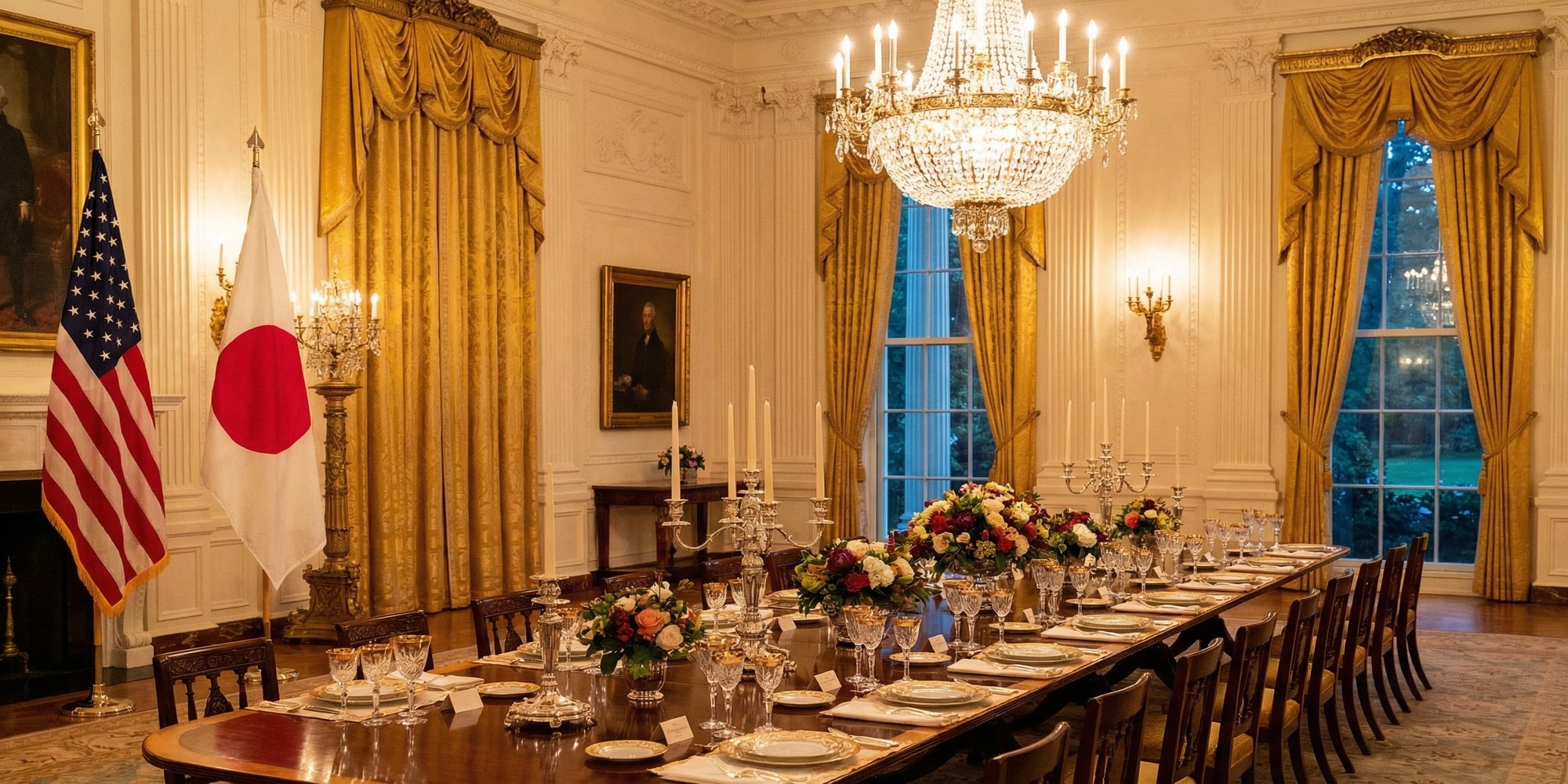
Amid the friction, the two governments signed a substantive commercial agreement. The White House announced that GE Vernova Inc. and Hitachi Ltd. would jointly build advanced small modular reactors in Tennessee and Alabama under a $40 billion framework, aimed at expanding U.S. electricity generation capacity and stabilizing power prices. The deal gave Takaichi a concrete deliverable: evidence of Japan's investment in U.S. economic infrastructure at a moment when Washington is publicly questioning the burden-sharing equation. By the state dinner that evening, Takaichi was calling the two leaders "best buddies" and declaring, in English, "Japan is back."
Policy Implications
The March 19 summit illustrates the pattern that has defined Trump administration alliance management: public pressure followed by negotiated ambiguity that allows both sides to claim progress without resolving the underlying divergence. Japan's constitutional limits on military deployment are a legal reality — one that the United States helped author after 1945. Takaichi's government is pursuing a gradual expansion of Japan's defense posture and collective self-defense capacity, but that trajectory operates on a timeline measured in years, not weeks.
Trump's escalating threat posture against Iranian infrastructure has complicated allied solidarity across both the Indo-Pacific and the Atlantic. European governments have endorsed the Hormuz statement while privately resisting any operational military role. The gap between U.S. willingness to bear costs and allied willingness to share them is becoming a defining feature of Western coalition dynamics. The Japan summit made that gap visible in unusually public form — and the Pearl Harbor remark ensured it would not be quietly forgotten in Tokyo.
The March 19 summit ended with the alliance formally intact — a nuclear deal signed, a joint statement issued, warm words exchanged over dinner. But the events of that Thursday in the Oval Office revealed fault lines that the Iran war has forced into the open: Washington's expectation that allies absorb costs, Tokyo's constitutional and political limits on meeting those expectations, and a diplomatic style from the current U.S. administration that treats historical sensitivities as negotiating friction rather than enduring obligations. Durability is not the same as alignment, and the gap between the two is widening. That gap opened because the summit was forced to absorb the same 2026 Iran–US war documented on the Armed Conflicts Map's Iran–US war tracker.
Related reading
- Oil Routes — Energy corridors, tanker risk, and commodity geopolitics.