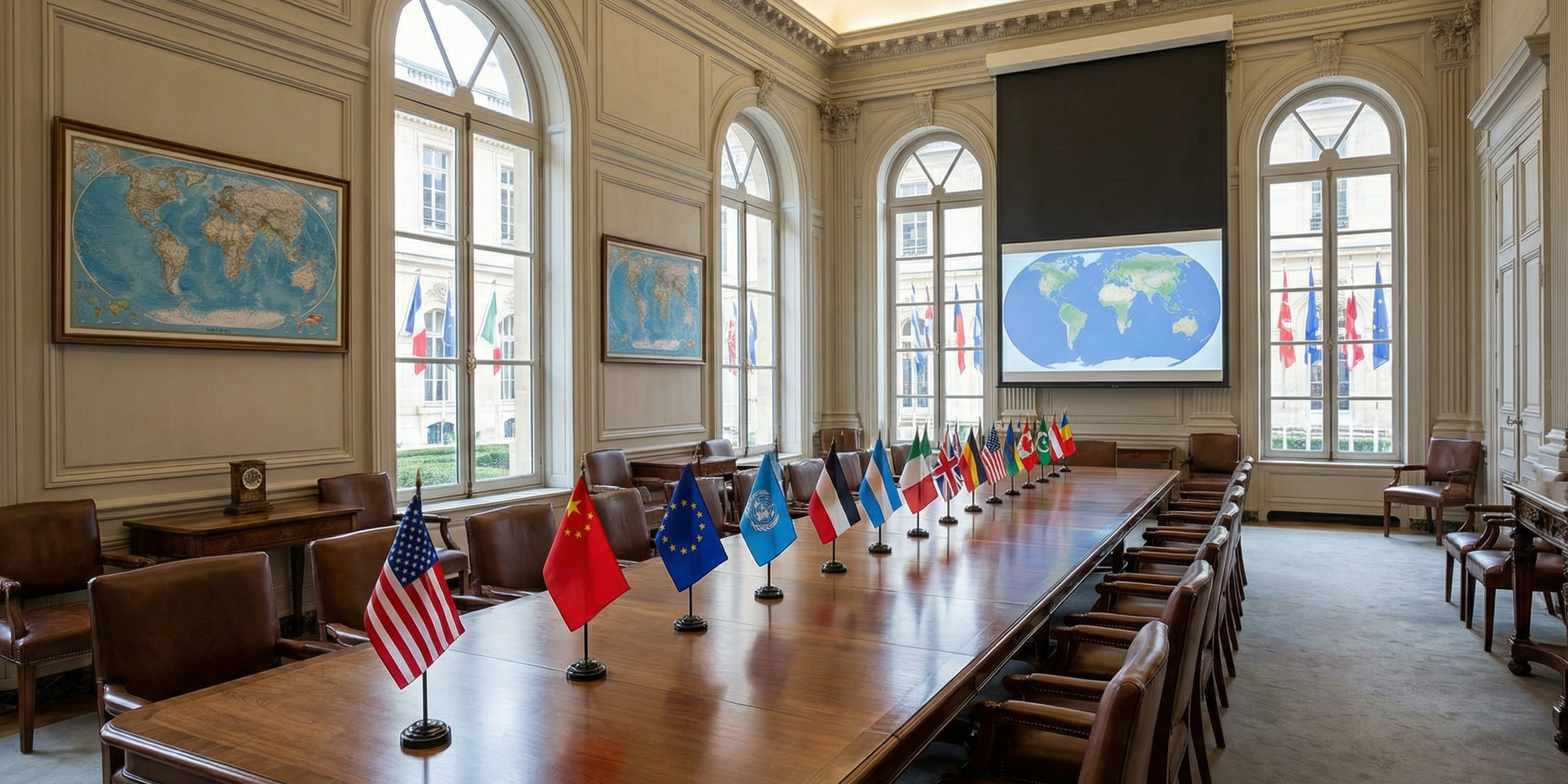
Trump Threatens to Delay Xi Summit as China Resists Hormuz Pressure
Washington is leveraging its most important bilateral relationship to coerce a Strait of Hormuz coalition — and Beijing is responding with calibrated ambiguity as Treasury Secretary Bessent scrambles to contain the diplomatic fallout.
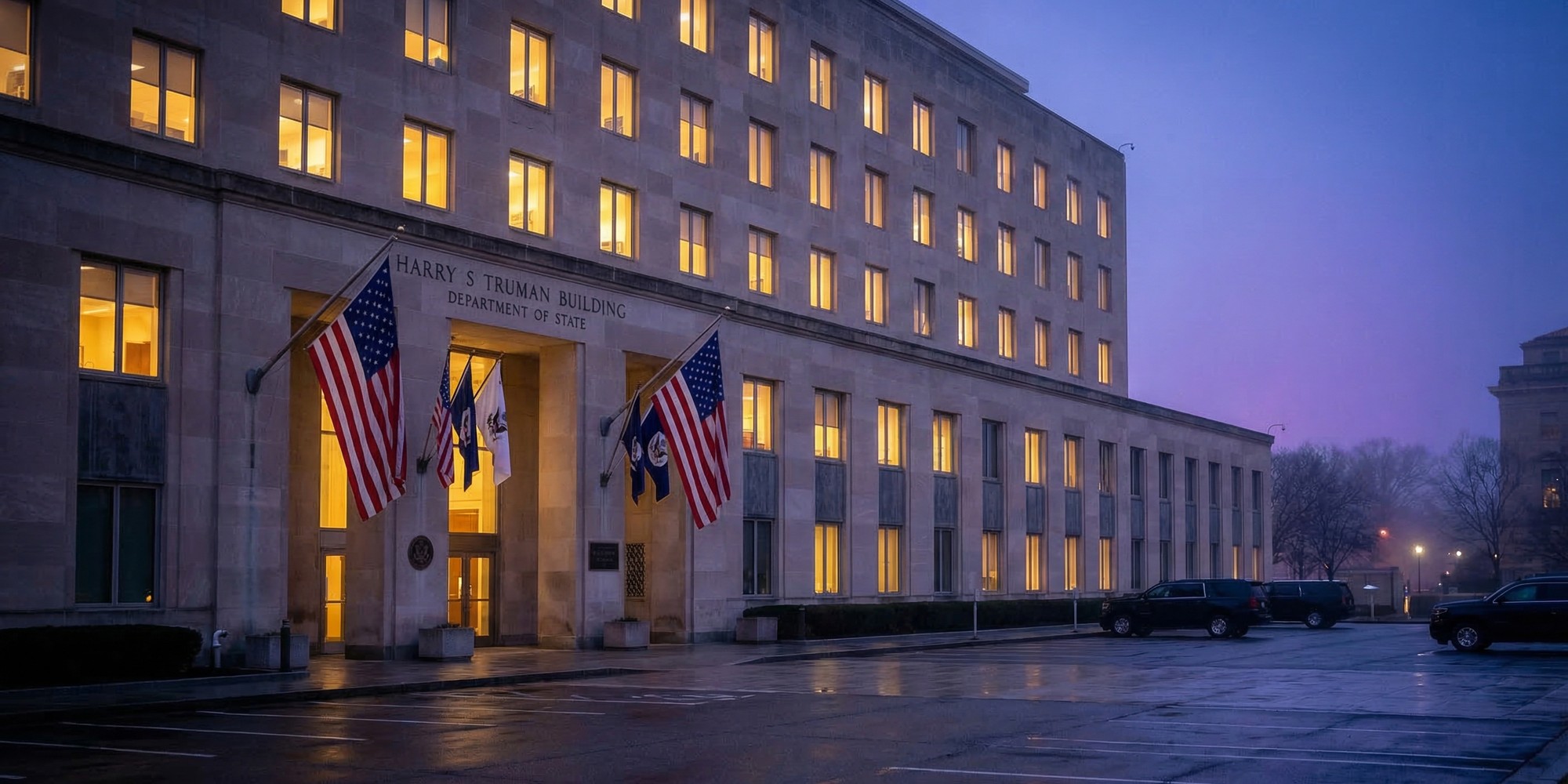
In the third week of Operation Epic Fury, the Trump administration's diplomatic strategy has reached an inflection point: with NATO allies having already declined to send warships to the Strait of Hormuz, Washington has turned to Beijing — and is using the most consequential bilateral summit on its calendar as leverage. The move sets up a test of whether coercive diplomacy that worked on defense spending can be replicated in the middle of an active war.
In an interview published by the Financial Times on March 15, President Trump said he was pressing China to assist in reopening the strait and indicated he would be willing to delay his planned end-of-March visit to Beijing if Beijing failed to respond. "I think China should help too because China gets 90% of its oil from the straits," Trump told the newspaper. By Monday, he had confirmed the delay was already in motion: "Because of the war I want to be here, I have to be here, I feel. And so we've requested that we delay it a month or so."
Key Takeaways
- Trump confirmed he has asked to delay the planned end-of-March Beijing summit with Xi Jinping by "a month or so," citing his need to remain in Washington as commander-in-chief during the Iran war.
- Trump demanded that China, Japan, South Korea, and several European nations send warships to help reopen the Strait of Hormuz, calling the request "only appropriate" for nations that benefit from the shipping lane.
- Treasury Secretary Scott Bessent, wrapping up two days of Paris trade talks with Chinese Vice Premier He Lifeng, publicly decoupled the summit delay from any Hormuz demand — attempting to preserve the broader U.S.-China relationship framework.
- China imports roughly 50% of its crude oil through the Strait of Hormuz; Beijing has declined to publicly commit to any military assistance and responded through careful diplomatic language about bilateral communications.
The Hormuz Ultimatum and Its Limits
Trump's Hormuz coalition push represents an extension of the pressure campaign he has deployed against NATO partners since Operation Epic Fury began. The administration has asked roughly a half-dozen countries — including Japan, South Korea, France, the United Kingdom, and China — to contribute minesweepers or other military assets to counter Iranian naval mines and drone attacks that continue to threaten commercial shipping through the strait. According to reporting by the Associated Press, none has formally committed. France is a tentative "maybe" contingent on unspecified circumstances; Britain is considered unlikely to dispatch a warship under current government policy.
The economic stakes are real. The Strait of Hormuz is the world's most critical oil chokepoint, through which approximately one-fifth of all globally traded petroleum flows. Analysts tracking the Hormuz supply disruption have flagged stagflationary risks as oil approaches $100 per barrel — a dynamic that, paradoxically, increases the financial pain felt by China as one of the strait's largest beneficiaries. Beijing imports roughly 50% of its crude through the waterway, making Iran's closure of the channel a genuine strategic liability for Chinese energy security, irrespective of Beijing's political calculus on the conflict itself.
"It's only appropriate that people who are the beneficiaries of the strait will help to make sure that nothing bad happens there."
— President Donald Trump, Financial Times interview, March 15, 2026
Bessent's Diplomatic Triage in Paris
While Trump was escalating the rhetorical pressure, Treasury Secretary Scott Bessent was in Paris conducting two days of trade talks with Chinese Vice Premier He Lifeng and U.S. Trade Representative Jamieson Greer — meetings intended to finalize the agenda for a Trump-Xi summit that had been considered one of the most anticipated diplomatic engagements of the year. Bessent told reporters after the talks concluded that the U.S.-China relationship was stable and that disputes over trade or shipping would not be responsible for any summit postponement.
"It would have nothing to do with the Chinese making a commitment to the Straits of Hormuz. It would obviously be in their interest to do so, but a postponement would not be as a result of any ask from the president not being met," Bessent said. He framed any potential delay as a decision Trump would make in his capacity as commander-in-chief, not as diplomatic retaliation. White House Press Secretary Karoline Leavitt separately told reporters that a delay was "quite possible." The competing signals from Trump and Bessent reflect a tension that has characterized the administration's approach to great-power diplomacy throughout the Iran conflict: coercive signaling from the president, followed by institutional damage control from his cabinet.
Beijing's Calculated Non-Response
China's official response has been a study in deliberate ambiguity. Chinese Foreign Ministry spokesperson Lin Jian, responding to questions about the summit status, offered a statement that acknowledged the situation without conceding anything: "Head-of-state diplomacy plays an irreplaceable strategic guiding role in China–U.S. relations. The two sides are maintaining communication regarding President Trump's visit to China." The formulation was careful enough to neither confirm nor deny the delay, while preserving the rhetorical dignity of the relationship.
Beijing's reluctance to commit military assets to Hormuz is driven by considerations that extend well beyond the Iran conflict. Any Chinese naval deployment alongside U.S. forces in the Persian Gulf would implicitly endorse Operation Epic Fury and expose Beijing to significant political costs at home and across the Global South, where China has cultivated a posture of non-alignment in U.S.-led military operations. Regional actors in the Gulf Cooperation Council are themselves pressing for a permanent resolution to Iran's military capacity, a goal that creates its own complex geometry for Chinese interests. At the same time, Beijing genuinely cannot afford an indefinitely closed Hormuz — the energy security consequences alone give China a structural interest in resolution that may ultimately make it more, not less, susceptible to U.S. pressure over time.
Policy Implications: The Architecture of Coercive Multilateralism
Trump's Hormuz coalition strategy follows a template the administration has used before: issue a blunt public demand, attach a credible cost to non-compliance, and allow the asymmetry between stated U.S. resolve and allied reluctance to create its own pressure. The approach secured significant NATO burden-sharing increases last year. Its application to China and the Hormuz crisis is more complicated, however, because the cost structure is different. Delaying a bilateral summit is reversible; a Chinese commitment to deploy warships to a U.S.-led coalition in an active war zone is not.
The Paris trade talks — in which Bessent, Greer, and He Lifeng reportedly made progress on managed trade and agricultural agreements — demonstrate that both sides retain an interest in the bilateral economic relationship that transcends the Iran crisis. That structural interest is, simultaneously, the source of Washington's leverage and the floor beneath which neither side is likely to allow the relationship to fall. Beijing has calculated that it can wait out the diplomatic pressure, continue trade negotiations, and avoid any military commitment — all without formally rejecting Trump's request. Whether that calculation holds as oil prices continue to rise and the Iran conflict prolongs remains the central question in U.S.-China diplomacy for the coming weeks.
Outlook
The summit, if delayed by approximately one month as Trump has requested, would now tentatively fall in early May. Whether the intervening period is used to extract a Hormuz commitment from Beijing — or simply allows both sides to quietly let the demand fade without being formally answered — will define the near-term trajectory of the U.S.-China relationship. What the episode has already clarified is that the administration views the Xi summit as a tradeable asset in crisis diplomacy, not an untouchable bilateral fixture. That framing carries its own long-term costs, regardless of how the Hormuz standoff resolves. The standoff being traded against the summit is the same strait crisis recorded on the Armed Conflicts Map's Strait of Hormuz crisis page.
Related reading
- Oil Routes — Energy corridors, tanker risk, and commodity geopolitics.