CENTCOM Secures Hormuz Passage After Dismantling Iran's Gulf Fleet
After dismantling Iran's Gulf of Oman fleet in Operation Epic Fury, U.S. Central Command has pivoted to sustaining open passage through the world's most critical energy chokepoint — a mission with rising global stakes and no defined endpoint.
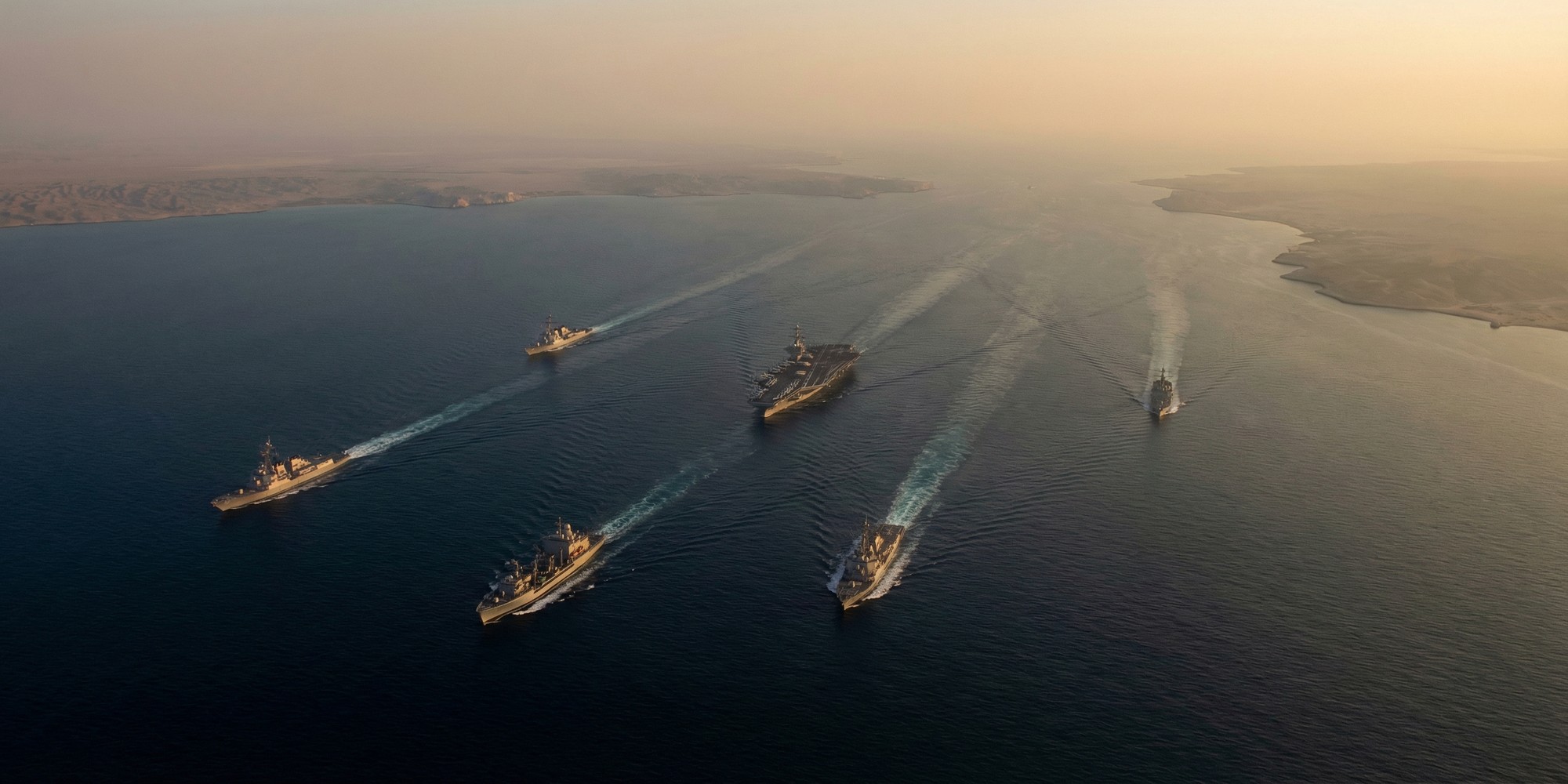
When U.S. and Israeli forces launched Operation Epic Fury on February 28, 2026, the destruction of Iranian naval assets was not incidental — it was the top priority in the first 48 hours. According to a fact sheet released by U.S. Central Command (CENTCOM), initial strike packages specifically targeted Iranian ships, submarines, anti-ship missile sites, and the naval infrastructure of both the Islamic Republic of Iran Navy (IRIN) and the Islamic Revolutionary Guard Corps Navy (IRGCN). The operational logic was strategic and immediate: deny Iran the tools to close the Strait of Hormuz, the 21-mile-wide passage through which approximately 20 percent of global oil and liquefied natural gas supplies transit every year.
Eight days into the conflict, CENTCOM declared that Iran's naval presence in the Gulf of Oman had been reduced to zero. Satellite imagery from Planet and Vantor, reviewed by defense analysts, confirmed widespread destruction at the Bandar Abbas and Konarak naval bases — multiple fires, sunken vessels, and razed port infrastructure. Struck ships reportedly included frigates from Iran's Bayandor, Alvand, and Jamaran classes. The question now confronting Pentagon planners is not whether Iran can mount a conventional naval challenge, but how the United States intends to govern the Strait over the long term as residual IRGC fast-attack craft, shore-based missile batteries, and drone capabilities remain partially intact.
Key Takeaways
- CENTCOM's first 48-hour strike package prioritized Iranian naval assets to prevent closure of the Strait of Hormuz, which carries 20% of global oil and LNG shipments.
- U.S. Central Command declared Iran's Gulf of Oman naval fleet reduced to "ZERO," with all 11 ships confirmed destroyed or sunk.
- CENTCOM stated the U.S. would ensure freedom of navigation through Hormuz "by any means necessary" after Iran's IRGC warned commercial shipping to halt transit.
- Oil prices spiked roughly 10% immediately after the conflict began, with Brent crude subsequently surpassing $90 per barrel amid ongoing uncertainty about the waterway's status.
The Strait as Strategic Objective
The Strait of Hormuz has been a central variable in U.S. Iran policy for decades, but the events of late February 2026 elevated it from a contingency concern to an active operational theater. When the IRGC, in the hours after initial U.S. strikes, declared via statement that passage through the Strait was "not allowed" and threatened attacks on commercial shipping, CENTCOM responded with explicit public clarity. The command stated it would ensure freedom of navigation "by any means necessary," describing Iran's posture as "an unacceptable threat" to global commerce and regional security — an unusual degree of unambiguous language for a command that typically communicates through measured operational updates.
President Trump, in his formal written notification to Congress under 50 U.S.C. § 1543, described the strikes as undertaken to "protect the U.S. homeland and forces in the region" and to "advance vital United States national interests, including ensuring the free flow of maritime commerce through the Strait of Hormuz." That framing — placing Hormuz access on par with homeland protection as a justification for military force — formalized what had long been an implicit commitment of U.S. Middle East policy into an explicit war aim.
"We're just getting started. The United States can sustain this fight easily for as long as we need to."
— Defense Secretary Pete Hegseth, press conference, March 5, 2026
Iran's Degraded but Not Eliminated Naval Threat
Iran maintained two distinct naval forces entering the conflict: the IRIN, the conventional navy with blue-water surface combatants and submarines — many dating to the pre-revolutionary era of the 1960s and 1970s — and the IRGCN, a coastal and asymmetric force built around small fast-attack craft, maritime mines, and anti-ship missiles. U.S. strikes systematically targeted the IRIN's larger assets and the IRGCN's command and logistics infrastructure. According to the Office of Naval Intelligence's Iran threat assessment, the IRGCN's doctrine of swarming tactics and shore-based denial systems represents the more durable residual threat even as its larger surface vessels have been neutralized.
The asymmetric risk is not trivial. Iran's capacity to lay naval mines in the Strait — a tactic used with significant effect during the 1980s "Tanker War" — remains intact. Shore-based anti-ship missile batteries have been degraded by strikes but are difficult to comprehensively eliminate from the air given dispersal and concealment capabilities. U.S. mine countermeasure vessels and escort operations for commercial tankers have accordingly become a key component of the ongoing campaign. Politico reported that CENTCOM has been actively coordinating with allied navies and commercial shipping associations on convoy protocols and real-time threat advisories.
The financial spillover has been immediate and substantial. Oil markets reacted to IRGC threats and the initial disruption of Hormuz traffic by pushing Brent crude up roughly 10 percent in the opening days of the conflict, with prices subsequently crossing the $90-per-barrel threshold as the conflict's duration remained uncertain. The ripple effects reached U.S. equity markets directly — the S&P 500 posted its worst weekly performance since April as energy price inflation combined with a disappointing jobs report to accelerate investor risk-off positioning.
Policy Implications: An Open-Ended Maritime Commitment
The Pentagon's Hormuz posture raises structural questions that extend well beyond the current phase of the Iran conflict. Maintaining freedom of navigation in a contested waterway requires not just the destruction of an adversary's naval forces but the sustained presence of U.S. assets capable of deterring residual threats — mines, fast boats, shore-based missiles, and commercially disguised armed vessels. The 1987–1988 Operation Earnest Will, in which the U.S. Navy escorted Kuwaiti tankers through the Gulf during the Iran-Iraq War, offers a historical precedent: a mission that lasted 13 months, involved 11 naval vessels lost to mines and hostile fire, and required sustained diplomatic coordination with Gulf Arab states.
Congressional oversight has been notably limited in the early days of the conflict. Both the Senate and House voted down War Powers resolutions this week that would have required the administration to seek legislative authorization for continued military operations, leaving the executive branch with unchecked authority to define the mission's scope and duration. For the Hormuz commitment specifically, that means the Pentagon can expand or contract its naval presence without formal congressional approval — a degree of operational flexibility that defense officials have signaled they intend to use.
What remains unresolved is whether sustained U.S. naval dominance in the Strait constitutes a temporary wartime measure or the foundation of a longer-term maritime security architecture in the Persian Gulf. If Iranian governance fractures in the weeks ahead, as Defense Secretary Hegseth has suggested is the administration's aim, the question of who controls the southern Iranian coastline — and its strategic geography — will define the next phase of U.S. policy in the region.
Conclusion
Operation Epic Fury's naval dimension was not about fleet-on-fleet combat; it was about geography. The Strait of Hormuz is the physical lever through which Tehran has long projected economic coercive power over the global energy market. By dismantling Iran's naval forces in the conflict's opening days, CENTCOM removed that lever. The question the administration has not yet answered is whether it has a strategy for what follows: a durable Hormuz governance framework, or an open-ended commitment that will shape Persian Gulf security architecture for a generation. CENTCOM's passage claim is the same strait-control fight tracked on the Armed Conflicts Map's Strait of Hormuz crisis briefing.
Related reading
- Oil Routes — Energy corridors, tanker risk, and commodity geopolitics.