State Department Orders Saudi Arabia Evacuation as Iran Conflict Threatens U.S. Diplomatic Posture
With Iran's retaliatory campaign engulfing the Gulf and Trump's "unconditional surrender" demand freezing formal talks, Washington faces a defining test of how to sustain diplomatic presence in an active war theater.

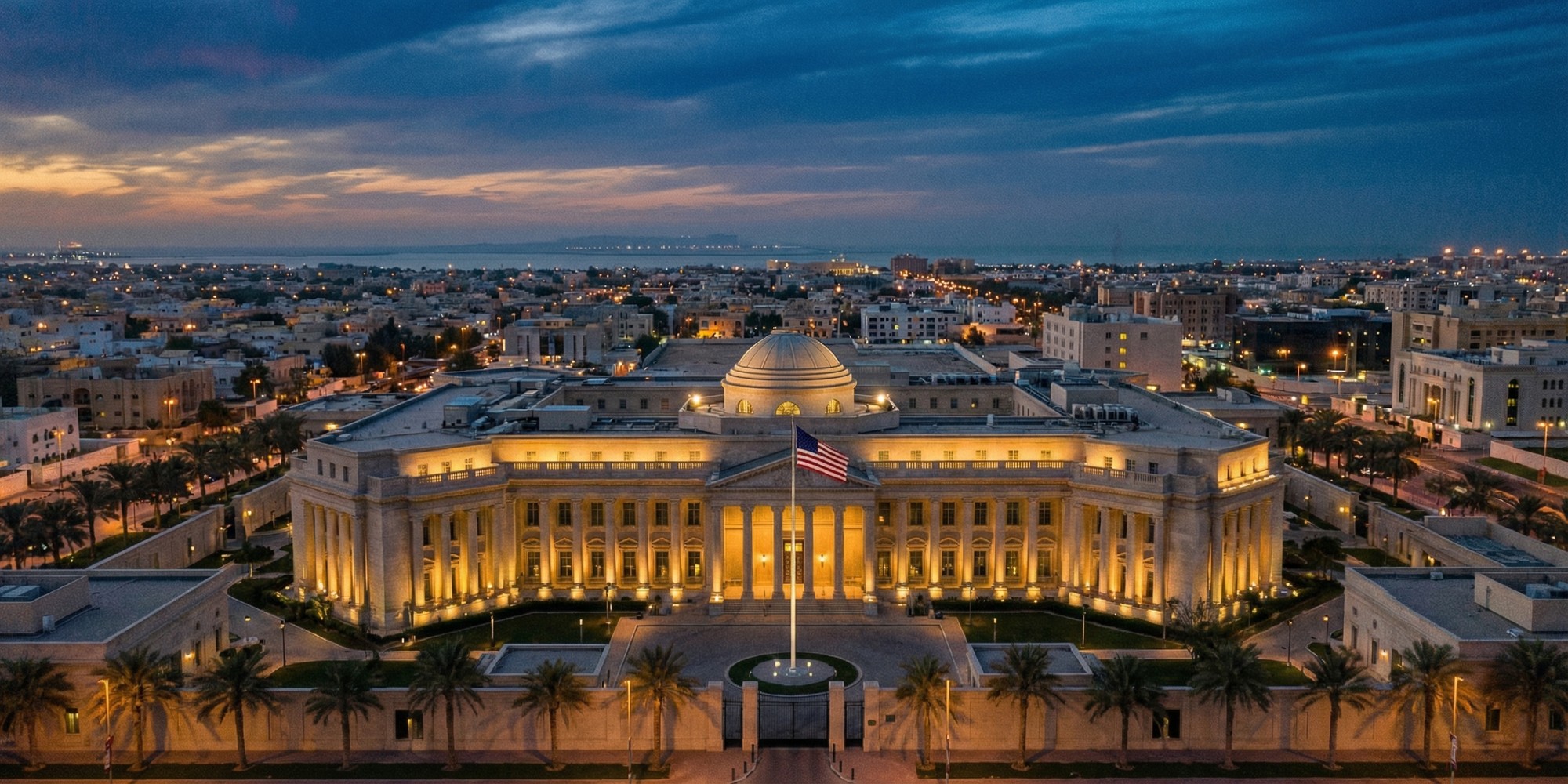
The U.S. Embassy in Riyadh issued a departure order for non-emergency government employees on Monday, March 9, citing heightened risks from armed conflict, missile strikes from Iranian forces and Yemen-based Houthi fighters, and a deteriorating security environment across Saudi Arabia. The directive — the first of its kind in the kingdom since the Iran conflict began on February 28 — marked a significant escalation in the State Department's protective posture and underscored the growing cost of maintaining a functional diplomatic presence in a theater where the United States is simultaneously both a military belligerent and an active diplomatic actor.
The embassy's updated travel advisory cited the Level 3 designation ("Reconsider Travel") and pointed specifically to the risk of missile and drone attacks from both Iranian forces and Houthi-affiliated groups operating out of Yemen. The announcement came hours after Israeli forces launched a fresh wave of strikes targeting infrastructure in central Iran, and as crude oil prices briefly breached $110 per barrel, according to CNBC — a level not seen since the acute phase of the 2022 energy crisis.
Key Takeaways
- The U.S. Embassy in Riyadh issued a departure order for non-emergency staff on March 9 — the first such directive in Saudi Arabia since the Iran war began February 28.
- The advisory cited Level 3 ("Reconsider Travel") risk from Iranian missiles, Houthi drone attacks, and terrorism; essential diplomatic personnel remain at post.
- Oman, the primary U.S.-Iran back-channel mediator, called for an immediate ceasefire on March 3, but formal talks have been effectively frozen since hostilities began.
- Trump publicly demanded Iran's "unconditional surrender" on March 7, complicating any near-term diplomatic resolution and deepening the gap between military objectives and diplomatic off-ramps.
Anatomy of the Departure Order
Departure orders — distinct from ordered departures, which mandate the exit of all family members and nonessential staff — allow embassy employees to leave at government expense while core diplomatic personnel remain at post. The State Department's decision reflects a calibrated protective response: maintaining institutional presence in Riyadh while formally acknowledging that the security environment has materially deteriorated. Senior diplomatic staff remain in place. Embassy operations have not been suspended.
Saudi Arabia hosts no permanent U.S. military combat forces, but it has functioned as a critical logistics, intelligence-sharing, and airspace coordination hub for U.S. Central Command operations since the conflict began. Iran's temporary leadership council announced on March 7 that it had agreed to suspend attacks on neighboring Gulf states unless strikes on Iran originated from their territory — a conditional de-escalation that stops well short of a ceasefire, but was widely read as Tehran's attempt to fracture Gulf-state willingness to sustain logistical support for U.S. operations.
The symbolic and practical weight of the departure order is considerable. Protecting the U.S. diplomatic mission in Riyadh is not merely a personnel security question — it is a signal about American credibility and staying power in a relationship that undergirds Washington's entire regional posture. Saudi Arabia's cooperation with U.S. counterterrorism, intelligence-sharing, and now military operations has historically been predicated in part on visible American commitment to the kingdom's security. An embassy evacuation, even a partial one, can complicate that calculus. The ripple effects on global energy markets from Gulf instability have made the stakes for both sides even higher.
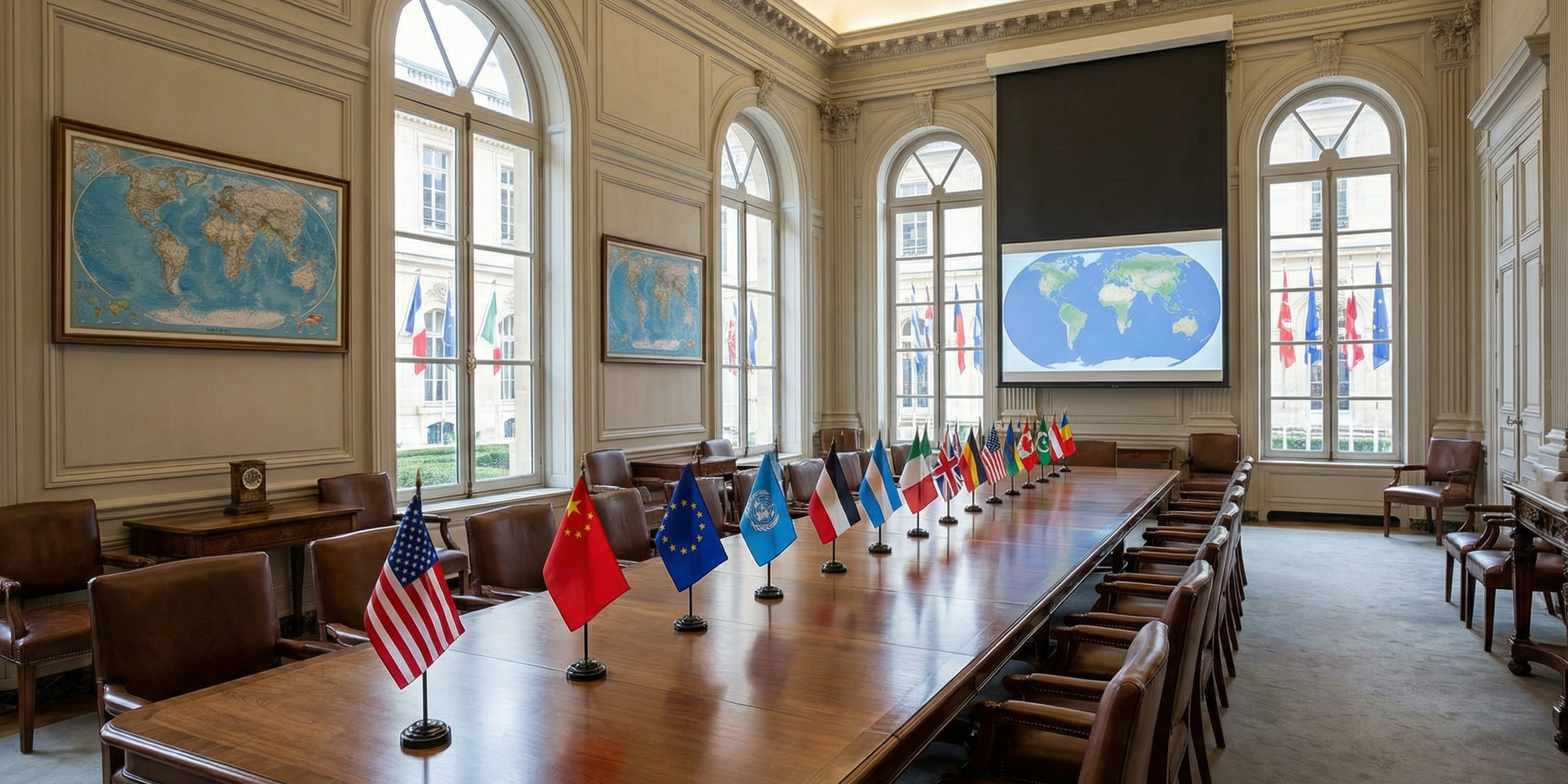
The Diplomatic Gap: Oman's Off-Ramps and Trump's Demands
The evacuation order arrives at a moment of acute diplomatic contradiction. Oman — which served as the primary back-channel between Washington and Tehran since at least February 6, 2026, when the two sides held indirect talks in Muscat mediated by Foreign Minister Badr bin Hamad Al Busaidi — called publicly on March 3 for an immediate ceasefire, stating that "off-ramps are available" to both parties. The appeal reflected Oman's historically unique position as a neutral diplomatic intermediary — a role the sultanate has played since facilitating the 2013–2015 back-channel that ultimately led to the JCPOA — but the outbreak of full-scale hostilities has effectively frozen the formal talks track, even as Muscat has not withdrawn from its mediating posture.
"Oman had been mediating talks between Iran and the US and said that peace was 'within reach' hours before the US-Israeli air strikes began."
— Al Jazeera reporting on Oman's mediation efforts, March 3, 2026
Qatar, which had also played an intermediary role and helped broker a prior ceasefire in an earlier round of Iran-related tensions, was drawn directly into the current conflict when Iranian drones targeted its liquefied natural gas infrastructure — forcing a suspension of roughly 20 percent of global LNG supply. The attacks removed Qatar as an immediately available neutral venue for diplomacy and complicated Washington's ability to rely on its traditional Gulf interlocutors for back-channel facilitation. The IAEA's ongoing struggle to monitor Iran's nuclear sites under active conflict conditions adds further complexity to any prospective negotiating framework.
Against this backdrop, President Trump's public posture has significantly complicated near-term diplomatic resolution. Speaking aboard Air Force One on March 7, Trump stated he was "not interested in negotiating with Iran" and raised the possibility that the conflict would only end once Iran's military was destroyed and its leadership eliminated. "At some point, I don't think there will be anybody left maybe to say 'We surrender,'" Trump told reporters, according to Reuters. Iranian President Masoud Pezeshkian dismissed the unconditional surrender demand as "a dream" while signaling Tehran's limited willingness to further escalate against Gulf neighbors whose cooperation Iran needs to survive economic isolation.
Policy Implications: Diplomatic Presence in an Active War Theater
The State Department faces a challenge with limited historical precedent: sustaining credible institutional diplomatic presence in a partner country while the United States is simultaneously prosecuting military operations in that country's immediate neighborhood. The House of Commons Library's March 2026 briefing on the conflict notes that Iran's counter-strikes against Arab Gulf states that house U.S. forces "may leave it further isolated" — but the same strikes are straining the political will of those governments to sustain American operational support.
History offers instructive but imperfect precedents. The U.S. Embassy in Baghdad continued operations through the height of the Iraq insurgency under military escort arrangements. The Kabul embassy operated until August 2021, when it was evacuated in hours. The Carnegie Endowment for International Peace observed in a March 2026 analysis that Gulf monarchies are "caught between Iran's desperation and the U.S.'s recklessness" — a framing that captures the bind facing American diplomacy. Gulf states absorbing Iranian retaliation for hosting U.S. forces cannot indefinitely sustain that posture without domestic political cost.
A more instructive model may be Beirut, where the U.S. Embassy has repeatedly cycled between reduced operations and authorized departures without full closure during successive regional crises. The selective departure order in Riyadh is consistent with that institutional playbook: protect personnel, preserve presence, and signal continued commitment without the escalatory optics of a full embassy closure. Whether the approach can hold will depend on how quickly — or slowly — the military situation evolves.
Conclusion: The Cost of Proximity
In the immediate operational sense, the U.S. Embassy departure order from Saudi Arabia is a routine protective security measure, well within the State Department's established protocols for conflict-adjacent environments. But its issuance during a conflict in which the United States is a direct military party signals something more consequential: that Washington is now navigating the collision between its military objectives and its diplomatic infrastructure requirements in real time, without a clear framework for managing them simultaneously.
Whether the diplomatic track can be revived will depend substantially on whether Oman retains the political credibility and institutional capacity to serve as an intermediary — and whether both Washington and Tehran see an off-ramp that is more attractive than continued escalation. As of March 10, neither condition is demonstrably in place. The State Department's calibrated posture in Riyadh is, for now, a holding action in search of a strategy. The departure order is diplomatic posture under the same Iran–US war recorded on the Armed Conflicts Map's Iran–US war tracker.
Related reading
- Oil Routes — Energy corridors, tanker risk, and commodity geopolitics.