Intelligence Community Revises China-Taiwan Timeline, Warns of Escalating Homeland Threats
The 2026 Annual Threat Assessment walks back the long-held 2027 Taiwan invasion benchmark while signaling that adversary missile programs now place the U.S. homeland directly at risk.
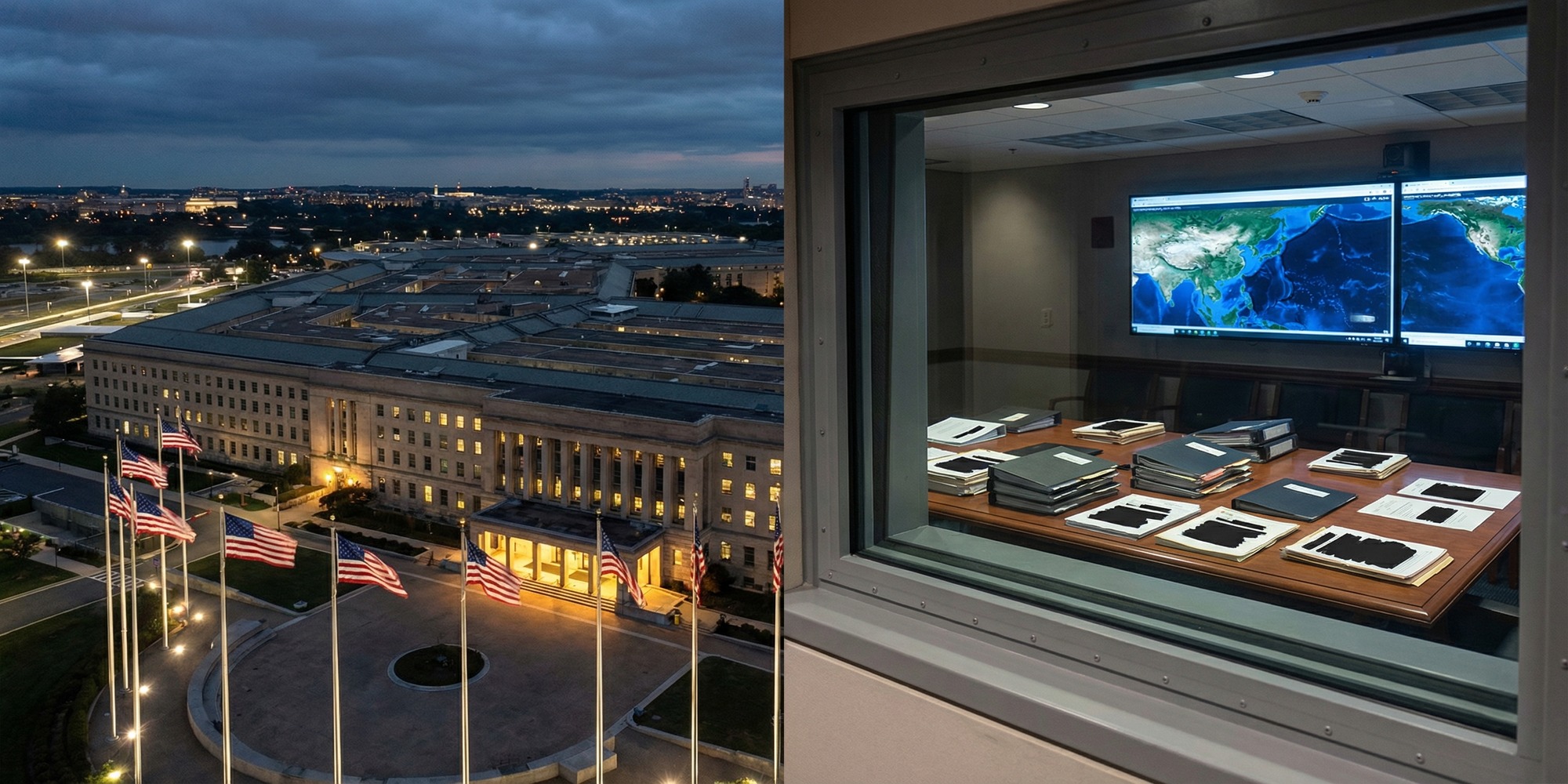
The U.S. Intelligence Community delivered a significant recalibration of its China threat assessment on March 18, releasing the 2026 Annual Threat Assessment that formally sets aside the widely-cited 2027 invasion timeline for Taiwan while simultaneously warning that multiple adversaries — led by China, Russia, and North Korea — have developed or are developing missile systems capable of striking the U.S. homeland. Director of National Intelligence Tulsi Gabbard presented the report before the Senate Intelligence Committee in a session that drew sharp questioning from both parties over the administration's handling of the Iran conflict and the long-term trajectory of U.S. security commitments in the Indo-Pacific.
The assessment's two headline conclusions pull in notably different directions. On Taiwan, the intelligence community offered a more measured picture than the Pentagon's posture just months earlier — one that aligns more closely with the diplomatic tone of the Trump-Xi relationship but that Taiwan's own government quickly cautioned against misreading. On homeland defense, the report catalogues a missile threat environment that analysts describe as the most complex the United States has faced since the Cold War.
Key Takeaways
- The 2026 Annual Threat Assessment states Chinese leaders "do not currently plan to execute an invasion of Taiwan in 2027, nor do they have a fixed timeline for achieving unification."
- China "prefers to achieve unification without the use of force, if possible," but the PLA continues making "steady but uneven progress" on military capabilities around Taiwan.
- DNI Gabbard warned that China, Russia, North Korea, Iran, and Pakistan are developing missile delivery systems "with nuclear and conventional payloads that put our Homeland within range."
- Iran's nuclear enrichment program was assessed as "obliterated" by 2025 air strikes, but the IC confirmed Tehran "maintained the intention to rebuild" its nuclear enrichment capability.
The 2027 Benchmark Revisited
For nearly five years, the 2027 date functioned as an informal planning horizon in Washington — drawn from the centenary of the People's Liberation Army's founding and crystallized by congressional testimony from then-Indo-Pacific Command chief Admiral Philip Davidson in 2021. The Pentagon as recently as late 2025 stated the PLA was "refining options to take Taiwan by brute force if needed" and preparing to win a fight by 2027. The new assessment marks a deliberate departure from that framing.
"China, despite its threat to use force to compel unification if necessary and to counter what it sees as a U.S. attempt to use Taiwan to undermine China's rise, prefers to achieve unification without the use of force, if possible," the report states. The IC further assessed that "Chinese leaders do not currently plan to execute an invasion of Taiwan in 2027, nor do they have a fixed timeline for achieving unification." The report does not claim the PLA threat has diminished — it acknowledges Beijing has "at times increased the scope, size, and pace of operations around Taiwan" — but frames the risk as contingent rather than calendar-driven.
The recalibration carries unmistakable diplomatic subtext. President Trump has repeatedly described his relationship with Chinese President Xi Jinping as a cornerstone of his foreign policy approach, and Trump stated in August 2025 that Xi told him directly China would not attack Taiwan while he is in office — a claim Beijing never formally confirmed. The new assessment reflects an institutional alignment with that framing. Taiwan's de facto embassy in Washington responded carefully, noting the island "will remain vigilant at all times" and emphasizing that "China has never abandoned the use of force against Taiwan, and its continued military intimidation and gray-zone operations pose serious threats not only to Taiwan but also to regional peace and stability."
"The intelligence community assesses that Russia, China, North Korea, Iran, and Pakistan have been researching and developing an array of novel, advanced, or traditional missile delivery systems with nuclear and conventional payloads that put our Homeland within range."
— Director of National Intelligence Tulsi Gabbard, Senate Intelligence Committee hearing, March 18, 2026
A More Dangerous Missile Environment
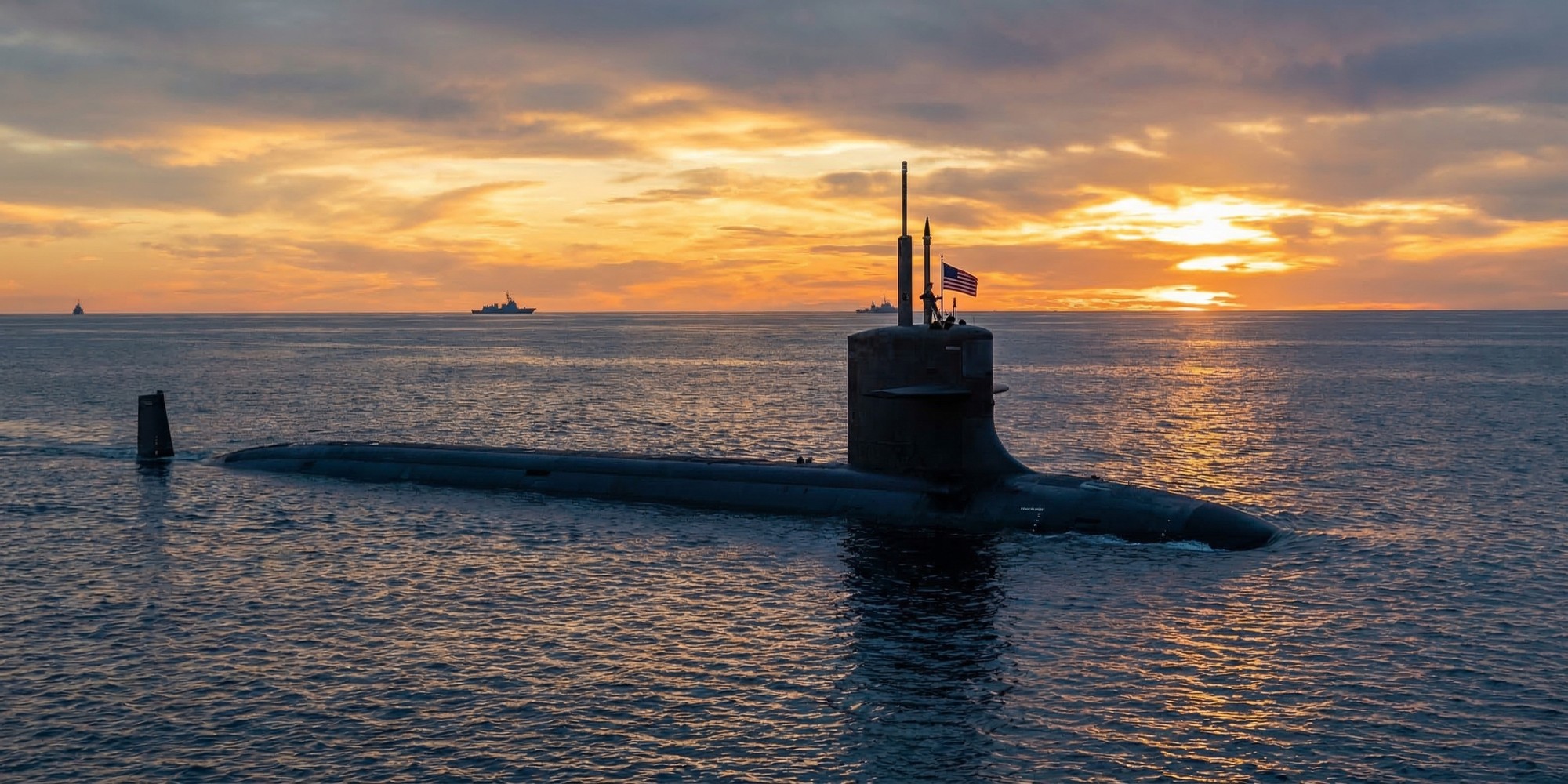
Whatever diplomatic space the Taiwan reassessment creates, the 2026 report provides no corresponding reassurance on the harder end of the threat spectrum. Gabbard's testimony before the Senate Intelligence Committee catalogued a missile threat landscape that spans five adversary states. Russia and China are specifically assessed as developing "advanced delivery systems meant to be capable of penetrating or bypassing U.S. missile defenses," a formulation that directly challenges the assumptions underlying existing U.S. homeland defense architecture. North Korea's ICBMs, the report notes, already hold the continental United States at risk.
The assessment's framing of Iran and Pakistan as part of this same missile proliferation picture adds layers of complexity to existing policy debates. The Trump administration has publicly touted the degradation of Iran's military capabilities following Operation Epic Fury. The IC's characterization — that all five states are simultaneously advancing both nuclear and conventional delivery systems — suggests the homeland defense challenge is structural rather than episodic, and will persist regardless of how any individual conflict concludes. The 2026 National Defense Strategy's emphasis on denial defense along the first island chain, cited in Brookings Institution analysis of the Indo-Pacific security environment, now must be reconciled with a simultaneous homeland vulnerability that the annual threat assessment makes explicit.
The question of missile defense investment has shadowed the defense budget debate for years. An IC document that formally names five states as capable of striking the homeland — and identifies China and Russia as specifically working to defeat existing defenses — is likely to intensify congressional pressure for accelerated investment, even as the Pentagon's supplemental funding requests related to Iran operations are already testing fiscal tolerances on Capitol Hill. For context on how escalating defense commitments are straining Western alliance cohesion, the diplomatic dimensions of the G7's fracture over Russia sanctions waivers — covered at Foreign Diplomacy — illustrates how multi-front threat management creates compounding strategic dilemmas.
Iran: Degraded Regime, Intact Ambition
The Senate hearing produced a carefully parsed but revealing exchange on Iran's nuclear status. Under questioning from Democratic Senator Jon Ossoff of Georgia, Gabbard confirmed that the intelligence community assesses Iran's nuclear enrichment program was "obliterated" by last year's air strikes — but she added that Iran has "maintained the intention to rebuild and to continue to grow their nuclear enrichment" capability. That distinction — capability destroyed, intent preserved — carries significant policy weight as the administration navigates what comes next.
Defense Intelligence Agency Director Lt. Gen. James Adams declined in the public session to assess whether air power alone could precipitate regime collapse, telling Senator Jack Reed of Rhode Island he would prefer to address the conditions for regime collapse in the classified portion of the hearing. The refusal to engage the question publicly — in a hearing already focused on threat assessment — signals ongoing uncertainty within the intelligence community about the endgame in Iran, an uncertainty that extends to financial markets tracking energy supply risk from the Hormuz corridor, as Global Market Updates has reported in its analysis of oil stagflation risk at $115 per barrel.
Policy Implications
The 2026 Annual Threat Assessment functions simultaneously as a diplomatic instrument and a strategic alarm. On Taiwan, the IC's measured language creates bandwidth for the Trump administration to pursue the trade and economic negotiations with Beijing that have been a central foreign policy objective — without the political pressure of a fixed military countdown that might force premature commitments. The assessment effectively decouples the Taiwan question from calendar-driven urgency while preserving the deterrence framework of the Taiwan Relations Act and U.S. arms sales.
On homeland missile defense, however, the report contains no equivalent reassurance. By naming five states — including two nuclear powers with explicitly stated objectives of defeating U.S. missile defense systems — the IC is setting parameters for a defense posture debate that will play out through the next budget cycle and beyond. The Pentagon's current Iron Dome for America concept, supported by the Trump administration, now has an IC document that provides specific threat context for its most expansive interpretations. How Congress reconciles that demand with existing fiscal constraints and Iran-related supplemental requests will define much of the defense policy agenda for the remainder of 2026.
Conclusion
The release of the 2026 Annual Threat Assessment marks one of the more consequential intelligence disclosures of the current administration — not for a single dramatic finding, but for the combination of signals it sends simultaneously. Washington's long-running Taiwan countdown has been formally suspended by the intelligence community, creating diplomatic room that the administration will almost certainly use. At the same time, the report's unambiguous warning about homeland missile threats from five adversary states — including two that are specifically developing the means to defeat existing U.S. defenses — establishes the terms of the next major national security investment debate. The net message from Gabbard's March 18 testimony is that the character of U.S. security challenges is changing faster than current policy frameworks have adapted to address them. The Taiwan half of that message is a timeline call on the same unresolved strait standoff recorded on the Armed Conflicts Map's Taiwan Strait tensions briefing.
Related reading
- Oil Routes — Energy corridors, tanker risk, and commodity geopolitics.