Senate Blocks War Powers Check as Trump's Iran Campaign Widens
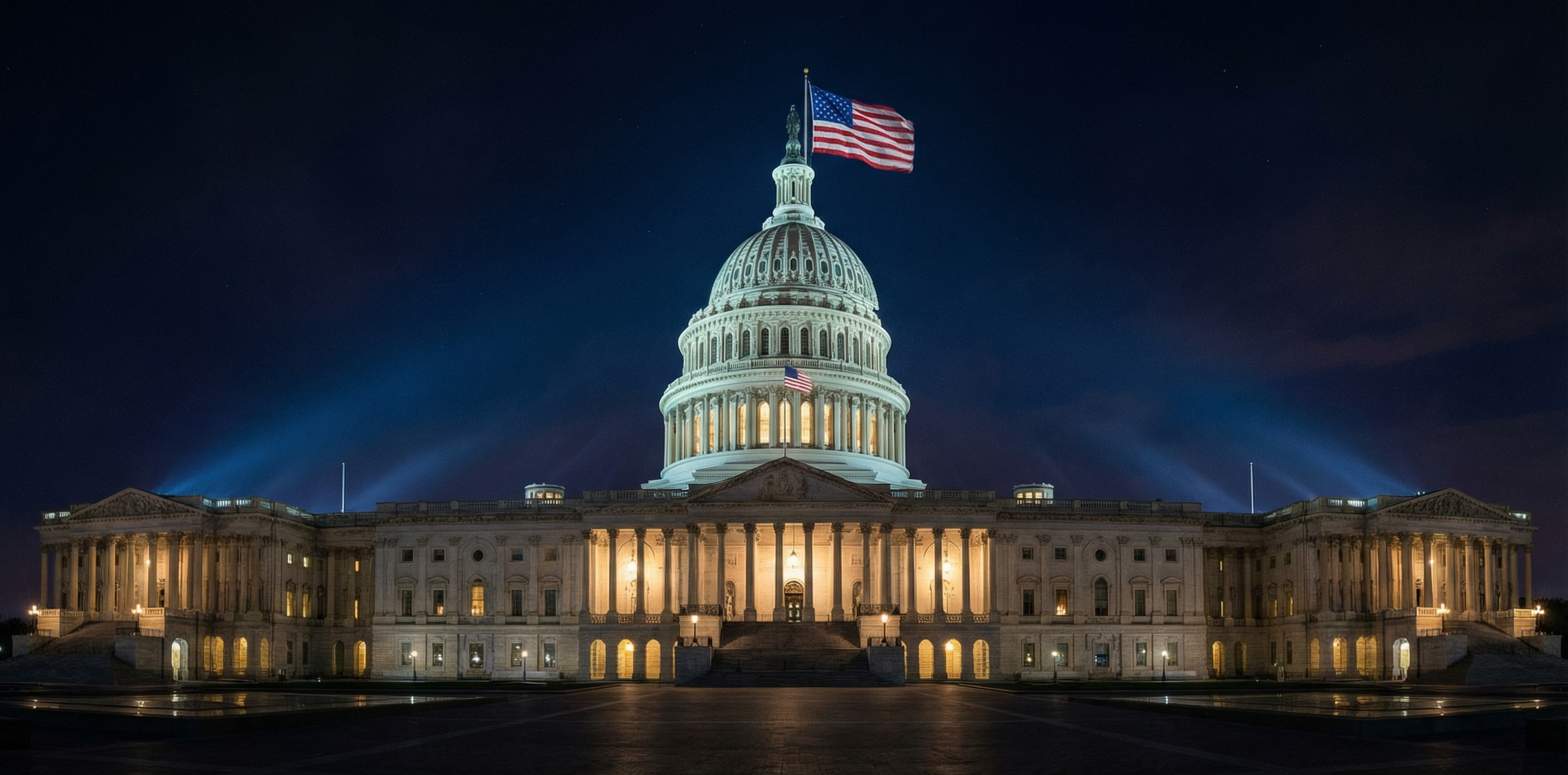
The United States Senate voted 47-53 on March 4 to defeat a war powers resolution introduced by Senator Tim Kaine (D-VA) that would have required President Trump to seek formal congressional authorization before continuing military operations against Iran. The vote, which broke almost entirely along party lines with nearly every Republican voting against the resolution, effectively ratified the administration's position that the existing legal authorities — including claims of inherent executive power and broad statutory authorizations — are sufficient to sustain an indefinite military campaign. The resolution's failure leaves Congress without a formal mechanism to constrain or condition the Iran operation through the war powers framework.
"Senate Republicans on Wednesday voted to prevent any congressional check on the United States' military operations against Iran, defeating a war powers resolution that would have required the administration to seek legislative authorization to continue the conflict. The 47-53 vote on a war powers resolution introduced by Virginia Democrat Tim Kaine broke largely along party lines."
— The Guardian, March 4, 2026
The Vote: Near-Unanimous Republican Opposition
The 47-53 tally reflected near-complete Republican unity against the resolution, according to reporting by The Guardian, The New York Times, and CBS News. Senator Lisa Murkowski of Alaska — who had occasionally broken with the Republican caucus on national security questions in the past — voted against the resolution alongside her colleagues. The absence of any Republican defections underscores the degree to which the party has consolidated behind executive primacy on military force authorization, a posture that represents a significant departure from the post-Vietnam consensus that produced the War Powers Resolution of 1973.
Kaine's resolution would have invoked the 1973 War Powers Resolution framework to require congressional authorization within 60 days of the commencement of hostilities. The administration had notified the congressional Gang of Eight prior to the February 28 strikes — a notification it characterised as a courtesy rather than a legal obligation — and has declined to submit a formal War Powers Resolution report to Congress, a filing that would trigger the statutory 60-day clock. The administration's shifting legal justifications for the operation, which CBS News has reported include Article II commander-in-chief authority, pre-existing AUMF provisions, and claimed imminent threat exceptions, were cited by Democratic senators as evidence of an executive branch that has not articulated a coherent or durable legal foundation for the campaign.
Historical Context: War Powers Since 1973
The War Powers Resolution of 1973 was passed by Congress over President Nixon's veto in the aftermath of the Vietnam War, representing the most significant congressional assertion of war-making authority in the post-World War II era. The resolution requires the president to notify Congress within 48 hours of introducing armed forces into hostilities and limits unauthorised military engagements to 60 days absent congressional authorisation.
In practice, every administration since Nixon — Republican and Democratic — has contested the resolution's constitutional validity while nominally complying with its reporting requirements. The Gulf War in 1991 and the Iraq War in 2003 both proceeded under formal congressional authorizations. The Obama administration's Libya campaign in 2011, which exceeded the 60-day limit without congressional authorisation, was the most recent major precedent for unilateral executive action — and it generated bipartisan congressional criticism that ultimately failed to produce any legislative constraint. The Trump administration's Iran campaign, operating without either a specific AUMF or a War Powers Resolution report, extends that executive branch precedent into a substantially larger and more complex military engagement.
The institutional implications extend to the congressional oversight architecture for military force more broadly. Legal scholars at Brookings Institution have noted that the March 4 vote reinforces a trend in which the War Powers Resolution functions not as a binding legal constraint but as a political pressure mechanism — one that majority party senators can neutralise through a simple vote, regardless of the scale or duration of the military operation at issue.
The Campaign's Scope and Trump's Stated Timeline
The Senate vote came against the backdrop of a military campaign that has already extended well beyond Iran's borders and generated escalating counter-strikes. President Trump stated publicly that he does not rule out ground forces and characterised the campaign's timeline as "one month or less" — a framing that has been interpreted by analysts as aspirational rather than operationally grounded, given the scale of Iranian retaliatory actions, the activation of proxy networks across Lebanon, Iraq, and Yemen, and the ongoing threat to Gulf state infrastructure.
Understanding how European allies have responded to the campaign — and what the transatlantic diplomatic consequences of the conflict have been — requires examining the intra-NATO tensions described in coverage of how European allies have responded to the campaign. Those tensions, including Trump's criticism of European allies for their non-participation statements, represent a parallel institutional stress alongside the domestic war powers confrontation. Iran's escalatory posture — which Brookings analysts have characterised as using escalatory strikes as leverage for eventual diplomatic re-engagement — suggests that the military timeline may not align with the one-month framing regardless of congressional posture.
The Economic Stakes and Congressional Inaction
The war powers debate is unfolding against an economic backdrop that gives additional weight to questions about the campaign's duration and escalation potential. Brent crude has surged approximately 19% year-to-date, settling at $81.40 on March 3 amid Hormuz disruption fears. Analysts warn that a sustained closure of the strait could push prices toward $100/barrel — a scenario with severe implications for US consumers and the Federal Reserve's inflation management capacity. The economic stakes of a prolonged conflict are significant, as tracked in analysis of the economic stakes of a prolonged conflict.
Congressional Republicans' calculation — that the political cost of constraining a popular military operation exceeds the institutional cost of ceding war-making authority — reflects a consistent post-9/11 pattern in which the legislature has repeatedly chosen executive deference over constitutional assertion on questions of military force. Whether that calculation remains viable as the campaign's costs become more apparent, and whether any Republican senator will break ranks under sustained public pressure, will determine whether the War Powers Resolution retains any practical constraining function in the current political environment.
Several senators have signalled they will pursue alternative oversight mechanisms — appropriations conditions, committee hearings, and confirmation leverage — in lieu of the failed war powers resolution. The administration's compliance with those mechanisms, and its willingness to provide regular classified briefings to the full Senate rather than solely the Gang of Eight, will be the practical test of whether Congress can exercise any meaningful oversight over an executive branch that has now twice rejected the war powers framework as a binding constraint. The vote itself was a constitutional fight over the same campaign recorded on the Armed Conflicts Map's Iran–US war page.
Related reading
- Oil Routes — Energy corridors, tanker risk, and commodity geopolitics.