Red Sea Redux: Houthis Open New Front as Washington Rethinks Gulf Strategy
Yemen's Houthi forces have resumed missile and drone strikes on Red Sea shipping lanes, confronting CENTCOM and State Department planners with a two-theater challenge as Operation Epic Fury enters its fifth week.
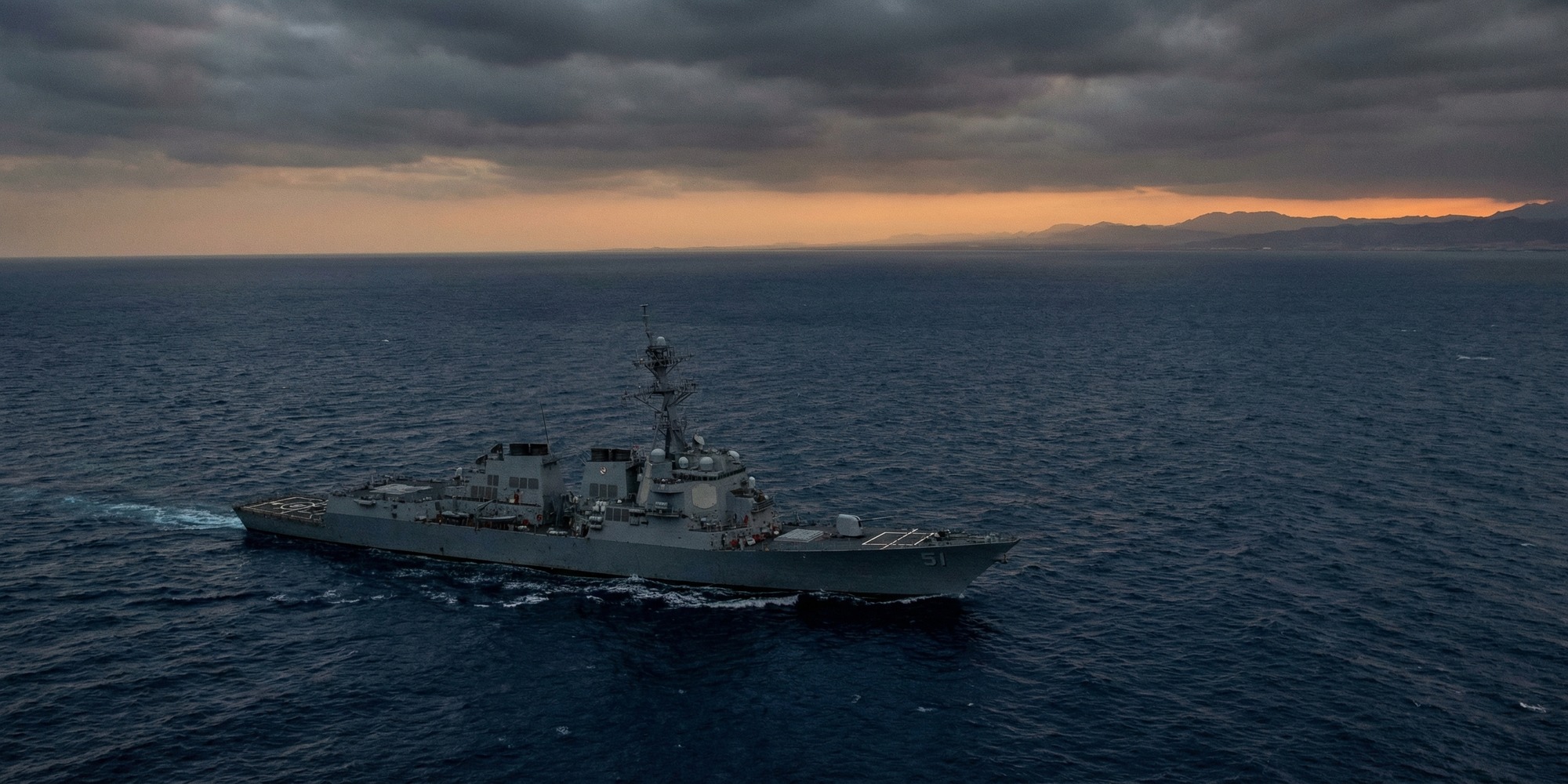
Yemen's Houthi forces resumed coordinated attacks on Red Sea commercial shipping on March 27, ending a three-week operational lull and opening a second military front for U.S. Central Command at a moment when Operation Epic Fury has already drawn down the Navy's precision-munitions stockpile to its lowest levels since the opening of the air campaign. U.S. Fifth Fleet public affairs confirmed three separate drone-and-ballistic-missile combination strikes targeting container vessel lanes south of the Bab el-Mandeb strait, with two commercial hulls sustaining damage and no crew fatalities reported.
The resumption was not unexpected by U.S. intelligence analysts. A March 2026 assessment by the Office of the Director of National Intelligence had assessed Houthi forces as retaining a "residual operational capability" to resume Red Sea interdiction activities despite the degradation campaigns conducted under Operation Poseidon Archer in early 2025. The question for CENTCOM planners was not whether Houthi forces would re-engage, but when — and whether the re-engagement would be coordinated with Tehran as a deliberate pressure lever on Washington's ceasefire diplomacy.
Key Takeaways
- Houthi forces resumed drone and ballistic missile strikes on Red Sea shipping on March 27, ending a three-week lull and opening a second active front for CENTCOM.
- Fifth Fleet has reassigned two Arleigh Burke-class destroyers from Gulf patrol duties to Red Sea escort operations, creating gaps in the cordon monitoring Iranian resupply movements through the Strait of Hormuz.
- Operation Epic Fury's air campaign has depleted Tomahawk and JASSM-ER inventories, creating direct competition between Iran strike requirements and the SM-6 and SM-2 Block IIIA interceptors needed for Houthi drone defense.
- State Department is pressing Riyadh and Doha to leverage their direct Houthi channels to forestall further escalation, but both capitals face domestic constraints that limit how hard they can push.
CENTCOM's Two-Theater Bind
The operational problem is resource competition. Analysis by the Center for Strategic and International Studies published in mid-March estimated that Operation Epic Fury had consumed approximately 38 percent of available Tomahawk Land Attack Missile stocks and roughly 22 percent of JASSM-ER inventory across four weeks of sustained strikes against Iranian military infrastructure. Pentagon officials briefing the House Armed Services Committee on March 21 acknowledged that an emergency procurement reprogramming under Title 10 authorities had been approved to accelerate Raytheon production, but restocking to pre-campaign levels will take 18 to 24 months under current manufacturing capacity.
The Houthi resumption adds a separate and more immediate demand: shipboard interceptors. Defending against Houthi drone-and-ballistic-missile combinations requires SM-6 and SM-2 Block IIIA missiles fired from Arleigh Burke-class guided-missile destroyers operating in the southern Red Sea. Fifth Fleet has already repositioned two DDGs — USS Gravely and USS Mason, both veterans of the 2024 Houthi campaign — from Gulf of Oman patrol stations to the Bab el-Mandeb zone, according to defense officials. That redeployment creates measurable gaps in the naval cordon CENTCOM had established to monitor and intercept Iranian resupply movements through the Hormuz approach channels, a mission described by CENTCOM as critical to sustaining pressure on the regime.
"We are adjusting force posture in the southern Red Sea to address the renewed Houthi threat while maintaining our operational commitments in the Gulf. Our resources are sufficient to execute both missions."
— U.S. Central Command spokesperson, March 28, 2026
The boilerplate confidence of that statement obscures a genuine capacity tension. As Foreign Diplomacy's analysis of the Houthi re-entry noted, the resumption of strikes coincides almost precisely with the G7 foreign ministers meeting in France, suggesting a level of political coordination with Tehran that goes beyond opportunistic proxy behavior. If the Houthis are acting as a deliberate pressure instrument — signaling Iranian displeasure with the 15-point ceasefire framework submitted via Pakistan — then CENTCOM's two-theater problem is also State Department's diplomatic problem.
The State Department's Channel Problem
Washington has historically relied on two indirect channels to communicate with Houthi political leadership: the Omani diplomatic track and, more recently, direct Saudi-Houthi contacts facilitated through the 2023 Beijing-brokered normalization agreement between Riyadh and Sanaa. Both channels are now under strain for reasons that have nothing to do with Yemen.
Oman's back-channel capacity is already saturated. Muscat has been serving as the primary conduit for U.S.-Iran ceasefire communications, and Omani foreign ministry officials have privately signaled to State Department counterparts that carrying parallel messages — one to Tehran on a ceasefire framework, another to Houthi political leadership on Red Sea restraint — risks compromising both tracks. The State Department has responded by redirecting its Houthi communication requests to Qatari and Saudi intermediaries, but both capitals face their own constraints.
Saudi Arabia presents a particular complication. Riyadh's own ceasefire with the Houthis — brokered under Chinese mediation in 2023 and quietly renewed in January 2025 — depends on Riyadh avoiding the appearance of acting as a U.S. proxy against Houthi interests. Any overt Saudi push on Washington's behalf risks reigniting the domestic political dynamics inside Yemen that Saudi diplomats spent two years managing. Qatar, by contrast, has fewer formal commitments but also fewer direct levers on Houthi behavior; Doha's primary value to U.S. ceasefire efforts has been as a conduit to Iran, not to its proxies.
Economic Pressure and Tehran's Signaling
The economic dimension of the Houthi resumption is significant and largely independent of the purely military calculus. Container shipping rates via Cape of Good Hope rerouting — which surged when Houthi attacks first closed effective Red Sea transit in late 2023 — had partially recovered during the three-week Houthi operational pause. The resumption of strikes reversed that trend within 48 hours. War-risk insurance premiums for Red Sea transit have spiked back to their December 2023 peaks, and major container lines including Maersk and CMA CGM have again suspended Red Sea routing for vessels above 10,000 TEU capacity.
The oil market implications are similarly direct. As Global Market Updates has tracked, Brent crude retested the $112 per barrel level in the 24 hours following confirmation of the Red Sea strikes, driven by renewed fears of sustained supply disruption layered on top of the existing Hormuz constraint. The dual chokepoint problem — Hormuz under Iranian mining threat, Bab el-Mandeb under Houthi interdiction — represents the most severe simultaneous threat to global energy supply routing since the 1973 oil embargo.
Policy Implications and Congressional Pressure
Washington's strategic options in Yemen are constrained by the same institutional tensions that have defined the broader Iran conflict. The legal authorization for U.S. military operations against Houthi forces in 2025 was grounded in the 2001 Authorization for Use of Military Force as interpreted through the 2024 Houthi-specific authorities passed under the National Defense Authorization Act. Whether those authorities extend to the current operational tempo — particularly if CENTCOM expands kinetic operations inside Yemen in response to the renewed campaign — is a question that several members of the Senate Foreign Relations Committee have already flagged for the administration.
The deeper policy question is one of prioritization. CENTCOM cannot simultaneously sustain the Iran air campaign at its current pace, maintain the Hormuz naval cordon, and execute sustained counter-Houthi operations in Yemen without accepting risk in at least one theater. The Pentagon's public posture — that resources are "sufficient for both missions" — reflects a political imperative to project confidence rather than an honest operational assessment. The decisions being made this week about destroyer positioning in the Red Sea will have consequences that extend well beyond the current exchange of strikes near Bab el-Mandeb.
The Diplomatic Path Ahead
For the State Department, the Houthi resumption is simultaneously a military problem, a diplomatic complication, and a potential negotiating signal. If Tehran authorized the Houthi re-engagement as a pressure lever on the ceasefire track, then managing the Houthi front and managing the Iran diplomacy are not separate tasks — they are the same task approached from different directions. Rubio's team is pressing Riyadh and Doha to use their available channels to signal that further Houthi escalation will harden congressional opposition to the limited sanctions relief already granted and reduce Washington's flexibility on the ceasefire terms. Whether that message reaches Sanaa — and whether Sanaa is actually in a position to restrain Houthi military operations unilaterally — remains the operational question that neither diplomats nor defense analysts can currently answer with confidence. The Houthi return to Red Sea shipping is the same second-front disruption recorded on the Armed Conflicts Map's Red Sea Houthi crisis page.
Related reading
- Oil Routes — Energy corridors, tanker risk, and commodity geopolitics.