NATO Allies Reject Trump's Hormuz Push
Germany, Spain, Italy, and Australia rule out military deployments to the Strait of Hormuz, leaving Washington to manage the consequences of a war it launched without allied consultation.
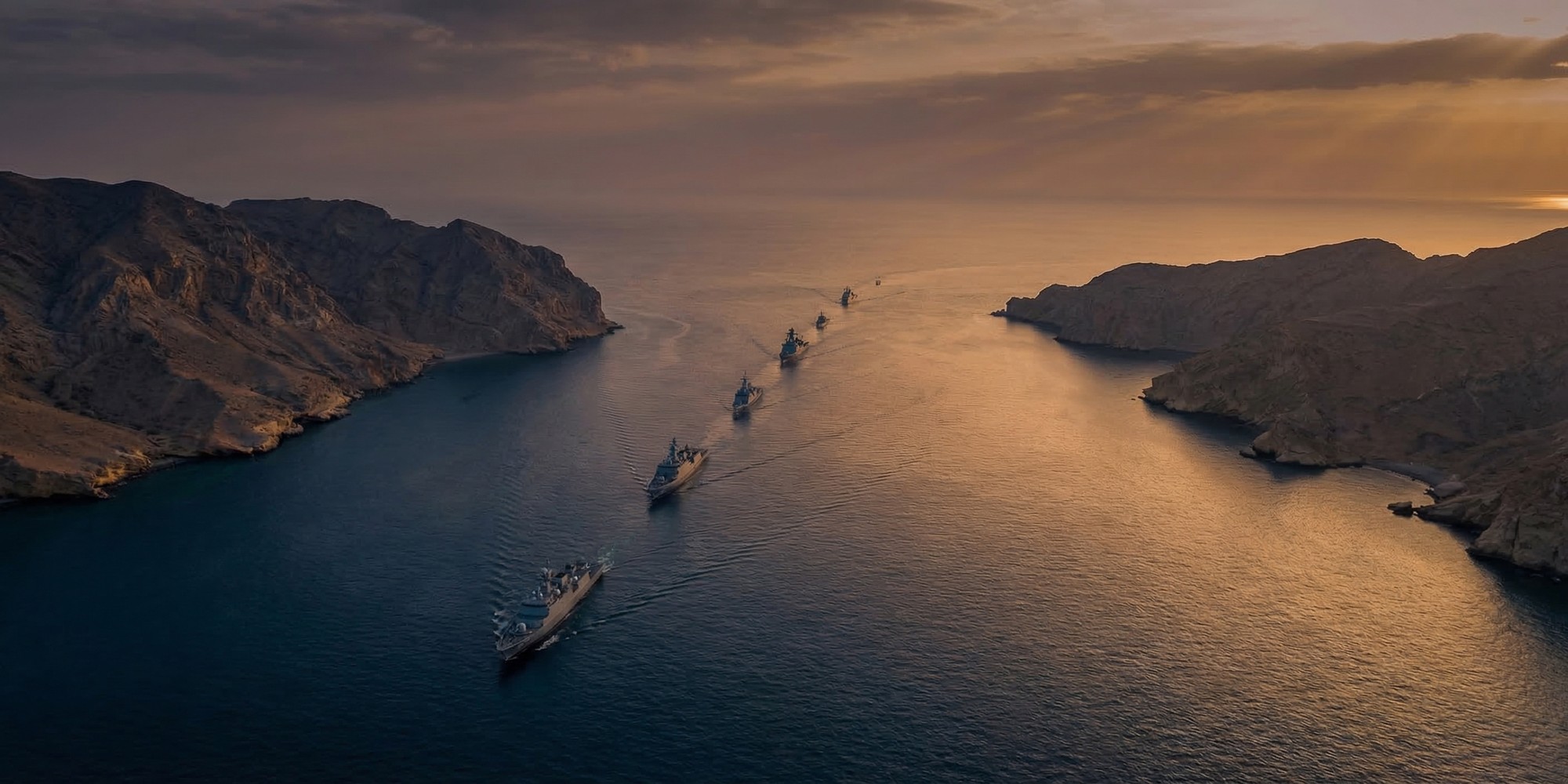
Three weeks into a war it launched without allied consultation, the United States is now asking those same partners to help manage the consequences. President Donald Trump called on roughly half a dozen nations — including China, France, Japan, South Korea, and the United Kingdom — to deploy warships and minesweepers to the Strait of Hormuz, a critical maritime chokepoint that Iran has effectively closed since the start of the U.S.-Israeli military campaign against Tehran on February 28.
The response has been swift and largely negative. By Monday, March 16, Germany, Spain, Italy, and Australia had all publicly ruled out military deployments to the strait. Britain and Denmark signaled possible support only in limited, non-combat roles. France left the door open under vague conditions. China offered no commitment. No country has publicly announced concrete plans to send warships, according to Reuters reporting from Berlin, Brussels, and London.
Key Takeaways
- Trump asked ~6 nations — including China, France, Japan, South Korea, and the UK — to deploy warships to reopen the Strait of Hormuz after Iran's closure of the waterway since Feb. 28.
- Germany, Spain, Italy, and Australia explicitly ruled out military participation; Britain and France offered only vague, conditional support.
- German Defense Minister Pistorius noted that Washington explicitly said at the war's outset that European assistance was "neither necessary nor desired."
- Brent crude surpassed $100 per barrel on March 16 as roughly one-fifth of global oil and LNG flows remain disrupted.
The Request: Coalition-Building After the Fact
Iran's closure of the Strait of Hormuz — executed through drone strikes, naval mines, and missile salvos targeting commercial tankers — has disrupted approximately one-fifth of global oil and liquefied natural gas flows. Brent crude surged past $100 per barrel on March 16, as commercial shipping insurers suspended coverage for Gulf-bound vessels and operators rerouted or idled their fleets. The broader market fallout from the Hormuz closure is tracked in detail by Global Market Updates, which documented the commodity repricing that accompanied the waterway's effective shutdown.
Speaking to the Financial Times on Sunday and reiterating at a White House briefing on Monday, Trump framed the request as a matter of shared global economic interest. "We strongly encourage other nations whose economies depend on the strait far more than ours … we want them to come and help us with the strait," Trump said, listing Japan, China, South Korea, and several European nations as examples. Trump also suggested he would press Chinese President Xi Jinping to contribute to a Hormuz coalition during his now-delayed trip to Beijing — a notion Treasury Secretary Scott Bessent later appeared to downplay, according to AP reporting.
The administration has also warned of diplomatic consequences for those who decline. Trump told reporters that the United States would "remember" which countries chose to help and which did not — language several European capitals interpreted as a veiled threat to existing alliance frameworks.
The Allied Rebuff: Capitals Push Back
The most pointed rejection came from Germany. Defense Minister Boris Pistorius publicly questioned both the logic and legitimacy of the American request, noting that Europe possesses more minesweepers than the United States yet cannot be expected to clean up after a conflict in which it had no say.
"This is not our war. We have not started it. What does Donald Trump expect a handful or two handfuls of European frigates to do in the Strait of Hormuz that the powerful U.S. Navy cannot do?"
— Boris Pistorius, German Defense Minister, March 16, 2026
German Chancellor Friedrich Merz reinforced that position, drawing a constitutional line: NATO was created as a defensive alliance and carries no mandate for operations associated with a war of choice launched by one member state against a third party. "NATO is a defensive alliance, not an interventionist one," Merz said. "And that is precisely why NATO has no place here at all." Germany's government further noted that Washington had explicitly stated at the conflict's outset that European assistance was "neither necessary nor desired."
Other European governments reached the same conclusion through different language. Spain's Foreign Minister José Manuel Albares said Madrid would not take any action that could "add even more tension or cause the situation to escalate further." Italian Deputy Prime Minister Matteo Salvini was blunter: "Italy is not at war with anyone and sending military ships in a war zone would mean entering the war." Australia's transport minister, Catherine King, said simply: "We won't be sending a ship to the strait of Hormuz."
Britain's position was more nuanced. Prime Minister Keir Starmer said the UK would not "be drawn into the wider war," though London separately indicated it was considering the deployment of aerial minesweepers — non-combat assets — to assist in clearing Iranian mines from shipping lanes. France suggested it might consider escorting ships "when circumstances permit," a formulation that set no timeline or commitment threshold.
The European Union's foreign policy chief, Kaja Kallas, floated a different diplomatic track: replicating the 2022 Black Sea Grain Initiative — a UN-brokered arrangement that allowed Ukrainian grain to move through a conflict zone — as a mechanism to restore Hormuz transit without military intervention. The EU is also examining whether the mandate of its existing Middle East naval mission, Operation Aspides, could be extended from the Red Sea to include Hormuz. Greece, which commands Aspides, said it would limit its participation to the Red Sea.
The Strategic Paradox: Weakening Alliances Before Needing Them
The diplomatic impasse reveals a structural contradiction at the heart of Trump's second-term foreign policy posture. The administration has systematically strained trans-Atlantic relationships — pressuring NATO members over defense spending, threatening to annex allied territory, and withdrawing from multilateral frameworks. The Hormuz episode is now the clearest example of the strategic cost of that approach: Washington needs the very alliance architecture it has spent months undermining.
As the Associated Press reported, Trump largely sidestepped diplomatic coordination in the lead-up to the February 28 strikes on Iran. Allies who were excluded from the decision to go to war are understandably reluctant to share the burden of its consequences. The tension between unilateral decision-making and multilateral burden-sharing has also played out at the United Nations, where the Security Council voted on Resolution 2817 condemning Iran's attacks on Gulf shipping — a measure that drew a record 136 co-sponsors but has not translated into military commitments, as Foreign Diplomacy reported following the vote.
Policy Implications: Alliance Cohesion Under Strain
The Hormuz episode places U.S. alliance management policy under the sharpest scrutiny it has faced in the post-Cold War era. The administration's transactional approach to alliances — treating collective defense as a ledger of debts and credits — has generated compliance on spending and basing issues. But military co-belligerency in a conflict allies were excluded from deciding presents a fundamentally different calculus: the cost of joining is reputational, constitutional, and potentially lethal. European publics in Germany, Spain, and Italy are broadly opposed to involvement in the Iran conflict, and coalition governments cannot afford the domestic costs of appearing dragged into Washington's war. Trump's "we will remember" framework carries real leverage in trade negotiations; it carries far less in decisions about deploying naval assets to active combat zones.
The Road Ahead
With no allied commitments secured as of March 17 and Hormuz remaining effectively closed, the United States faces a narrowing set of options. Unilateral naval operations to clear Iranian mines have proven insufficient against Iran's layered maritime denial strategy. A diplomatic solution — through a UN-mediated passage agreement or direct U.S.-Iran negotiations — would require engaging the ceasefire frameworks the White House has consistently rejected. The gap between Washington's stated policy of military pressure and its operational reality — an unclosed strait, no coalition — remains publicly unaddressed. Allied refusal to put ships in the water is the same Hormuz coalition gap recorded on the Armed Conflicts Map's Strait of Hormuz crisis page.
Related reading
- Oil Routes — Energy corridors, tanker risk, and commodity geopolitics.