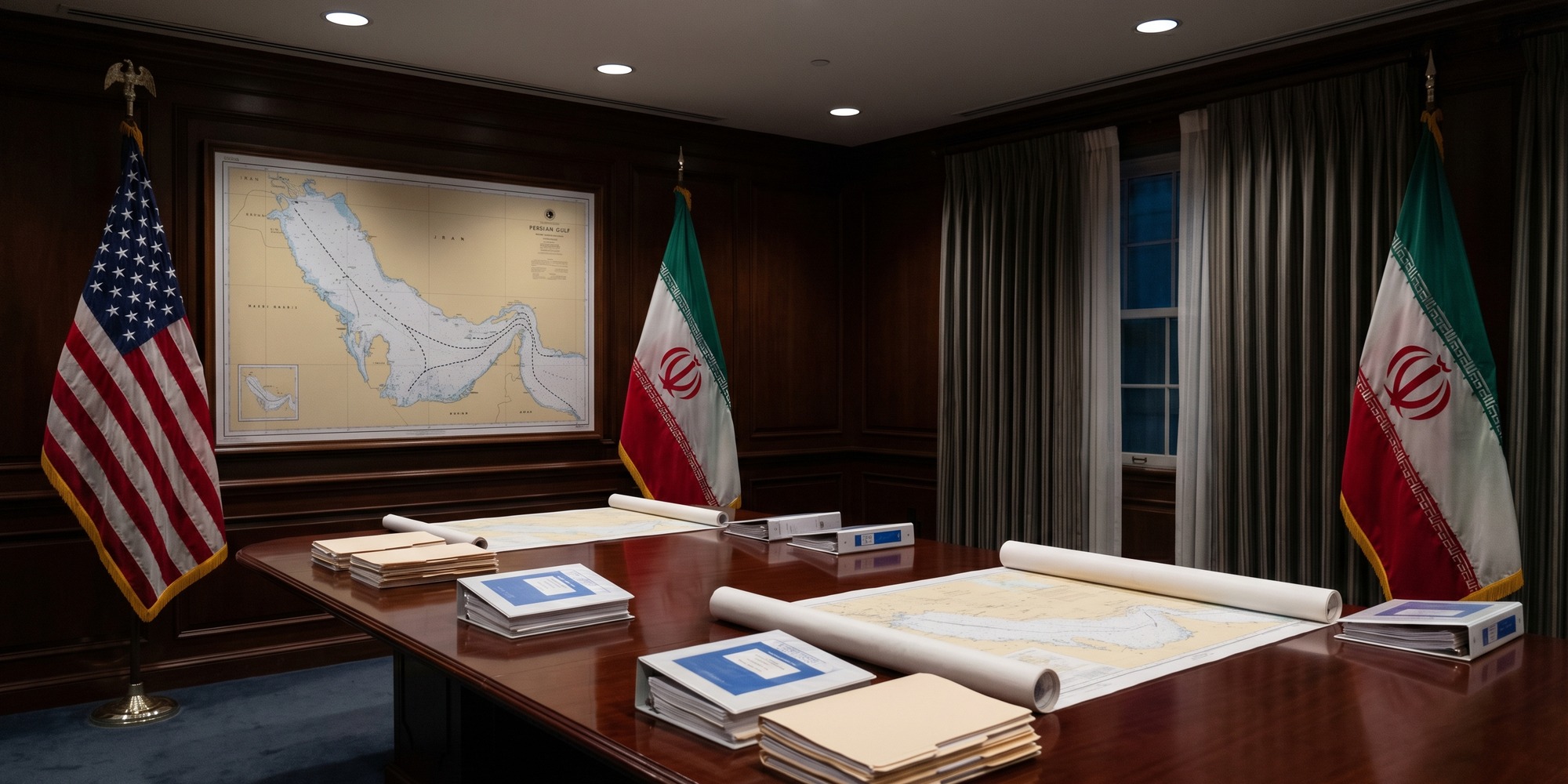
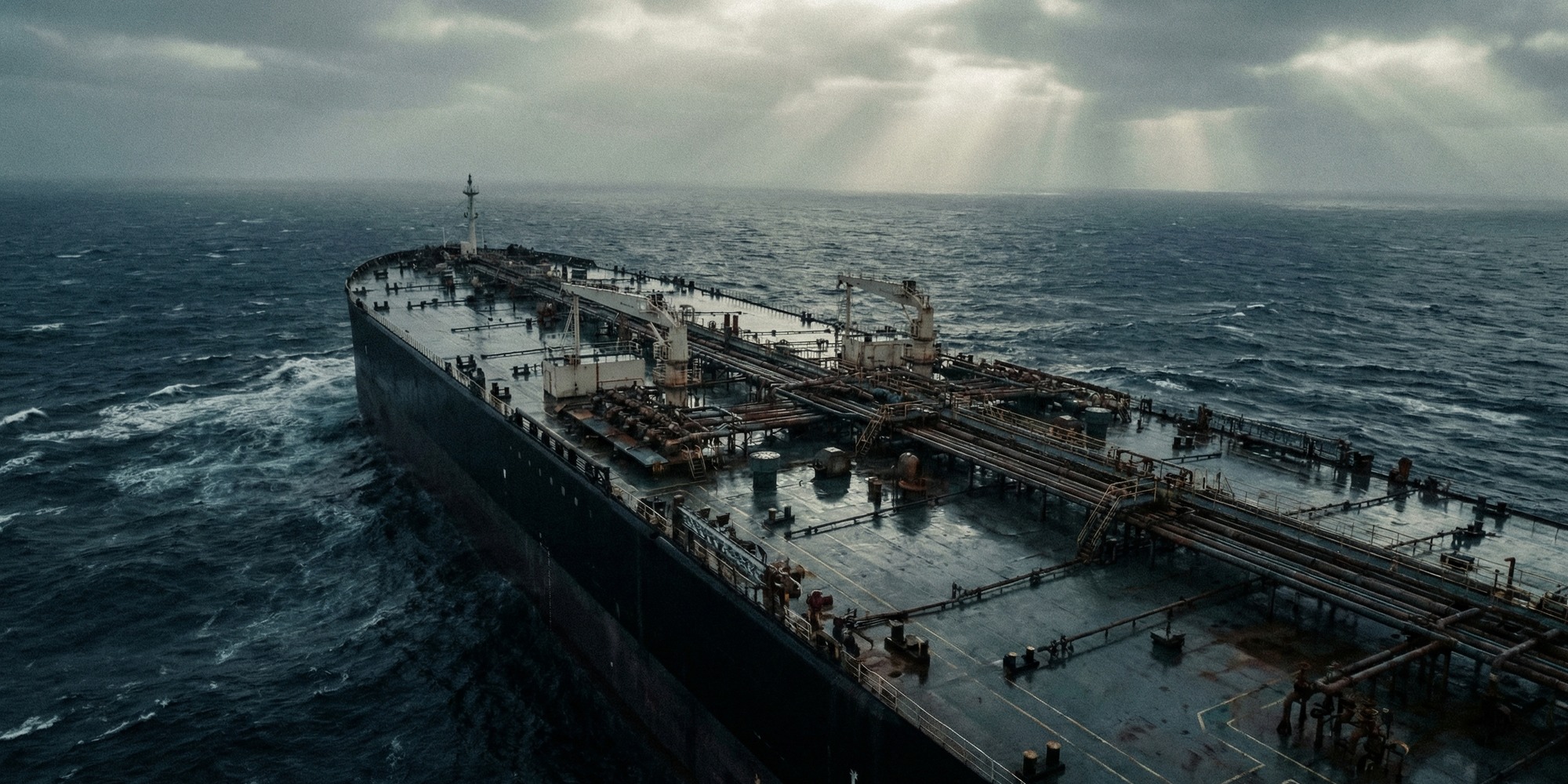
Iran Shadow Fleet Sanctions Intensify
As Operation Epic Fury enters its third week, Washington is waging a parallel economic war — designating shadow fleet vessels, Chinese refiners, and weapons procurement networks to starve Tehran of the oil revenue funding its military machine.
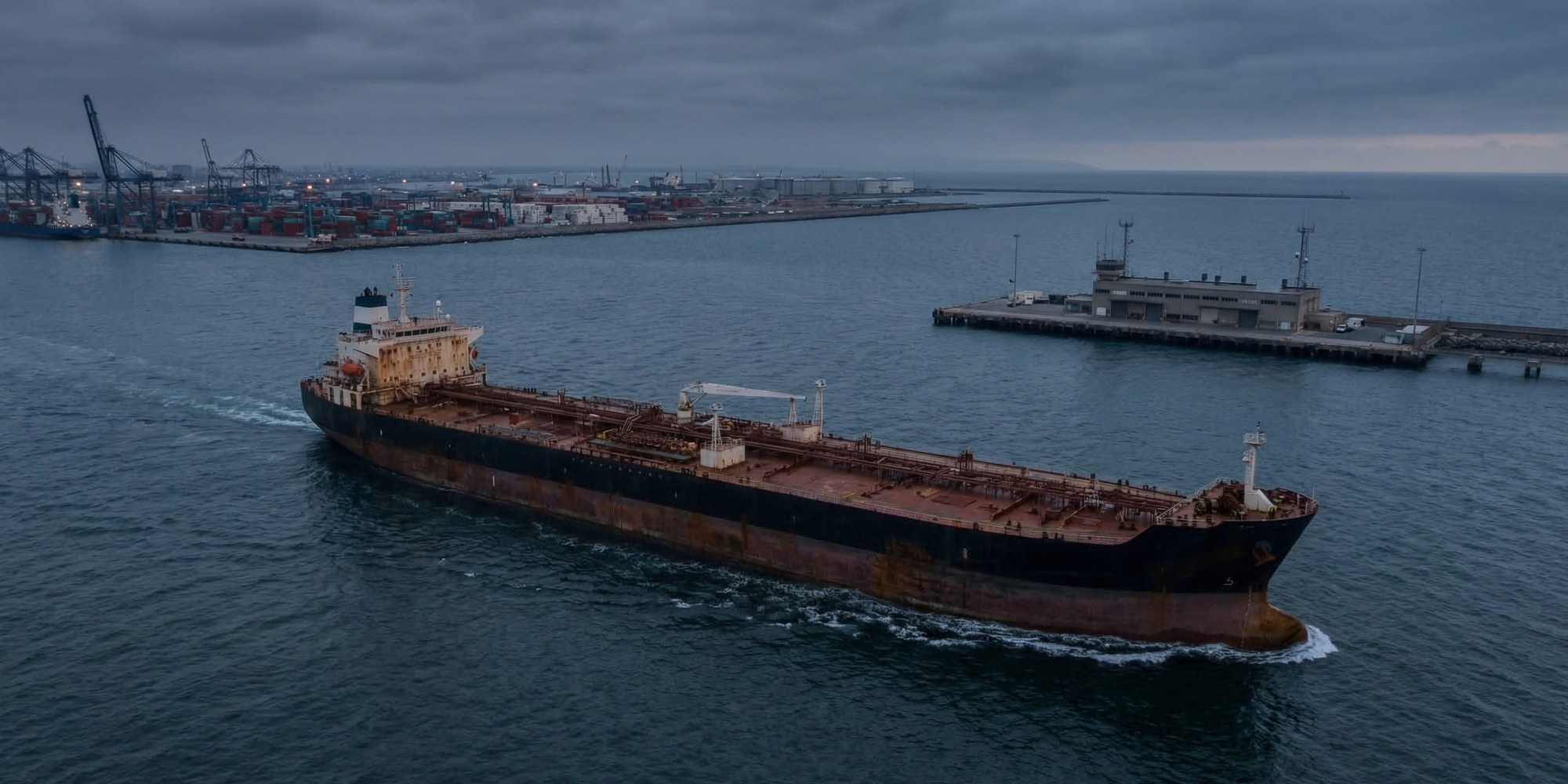
The United States is waging two simultaneous campaigns against Iran. The first, Operation Epic Fury, has deployed airpower and naval assets across the Persian Gulf in an effort to degrade Tehran's military and nuclear capabilities. The second, less visible but no less consequential, unfolds in spreadsheets and designation lists at the Treasury Department's Office of Foreign Assets Control: a relentless effort to cut off the oil revenues that fund Iran's weapons programs, proxy forces, and domestic security apparatus. In the past five weeks alone, Washington has sanctioned more than 30 individuals, entities, and vessels directly tied to Iran's shadow fleet — the sprawling network of tankers, front companies, and middlemen that has for years allowed Tehran to evade Western energy restrictions.
That campaign is now accelerating. On February 25, 2026, the State Department and Treasury jointly announced new designations targeting shadow fleet operators and weapons procurement networks based in Iran, Türkiye, and the United Arab Emirates, covering individuals and entities that have supported the Islamic Revolutionary Guard Corps' ballistic missile programs and advanced conventional weapons production. A companion action on February 10 identified 14 shadow fleet vessels as blocked property and sanctioned 15 entities that had traded in Iranian-origin petroleum products — all pursuant to Executive Order 13846, which authorizes and reimposes a broad range of Iran-related sanctions.
Key Takeaways
- Washington has sanctioned more than 30 individuals, entities, and vessels in shadow fleet–related actions since late January 2026, part of a maximum pressure campaign directed by National Security Presidential Memorandum 2.
- The February 25 State/Treasury action targeted weapons procurement networks in Iran, Türkiye, and the UAE supporting IRGC ballistic missile and conventional arms production.
- OFAC sanctioned China-based "teapot" refiner Shandong Shengxing Chemical in April 2025 for purchasing more than $1 billion in Iranian crude — a signal that secondary pressure on foreign buyers is a core enforcement tool.
- India faces pressure from both Washington and Beijing over its Iran oil exposure, complicating a diplomatic balancing act that Washington monitors closely as a secondary sanctions compliance test case.
The Architecture of Maximum Pressure
The legal and policy framework for this campaign was put in place at the start of the current administration. National Security Presidential Memorandum 2 (NSPM-2), issued in February 2025, directed all relevant agencies to reimpose maximum economic pressure on the Iranian regime, with particular emphasis on cutting petroleum revenues that finance domestic repression, terrorist proxies, and weapons development. The results through 2025 were significant: OFAC sanctioned more than 875 persons, vessels, and aircraft as part of the campaign — a pace that has continued into 2026.
"Iran exploits financial systems to sell illicit oil, launder the proceeds, procure components for its nuclear and conventional weapons programs, and support its terrorist proxies. Under President Trump's strong leadership, Treasury will continue to put maximum pressure on Iran to target the regime's weapons capabilities and support for terrorism, which it has prioritized over the lives of the Iranian people."
— Treasury Secretary Scott Bessent, February 25, 2026
The designations operate across multiple executive order authorities. E.O. 13846 targets Iran's petroleum and petrochemical sectors. E.O. 13902 authorizes broader sanctions on key sectors of Iran's economy. E.O. 13382 covers proliferators of weapons of mass destruction and their supporters, while E.O. 13949 specifically addresses Iran's conventional arms activities. Together, these authorities give OFAC a layered toolkit to pursue not just Iranian actors directly but the network of foreign enablers — shippers, financiers, refinery operators — that make Iranian oil sales possible despite existing restrictions.
Targeting the Buyers: Secondary Sanctions and the China Dimension
The most strategically significant aspect of U.S. Iran sanctions enforcement is not the designation of Iranian entities — which have limited US assets and already operate under extensive restrictions — but the secondary sanctions pressure applied to foreign buyers. In April 2025, OFAC designated Shandong Shengxing Chemical Co., Ltd., a China-based independent "teapot" refinery, for purchasing more than $1 billion worth of Iranian crude oil, including from a front company for the IRGC-Qods Force. The action sent an unambiguous message: third-country commercial actors that continue purchasing Iranian petroleum face designation and the loss of access to the US financial system.
That message is being received — and contested — in Beijing and New Delhi. China's independent refineries have historically been among the largest buyers of discounted Iranian crude, providing a critical revenue stream that partially insulates Tehran from Western pressure. The designation of Shandong Shengxing, while representing one node in a complex network, was designed to raise compliance costs across the entire sector. As documented by Foreign Diplomacy's analysis of the India oil waiver negotiations, Washington has used the threat of secondary sanctions as leverage in bilateral diplomacy with Asian energy importers — offering temporary carve-outs in exchange for broader strategic alignment, while maintaining the credible threat of enforcement for those who do not comply.
India presents a distinct case. As CNBC reported on March 10, New Delhi is attempting to preserve its traditional neutral posture as escalating conflict around Iran threatens its oil supply and exposes it to simultaneous pressure from Washington and Beijing. India has historically been one of Iran's largest oil customers, and the disruption of Hormuz shipping routes during Operation Epic Fury has created an acute supply challenge that complicates its sanctions compliance calculus. Washington's willingness to extend temporary waivers — or not — will be a key indicator of how broadly the secondary sanctions net is cast during the active military phase of the campaign.
Policy Implications: Economic Warfare in Wartime
The simultaneous prosecution of a military campaign and a maximum pressure sanctions campaign creates strategic tensions that policymakers have not fully resolved. On one hand, the rapid rise in global oil prices following the Hormuz disruption — prices spiked sharply after Iran closed the strait in the early days of the conflict, as Global Market Updates has tracked extensively — has paradoxically increased the value of the Iranian oil that does reach market, partially offsetting the revenue impact of the sanctions pressure. Shadow fleet tankers able to navigate around enforcement are now commanding significant premiums.
On the other hand, the military campaign itself disrupts Iran's ability to load and export petroleum, creating a de facto enforcement mechanism that supplements formal OFAC designations. Port infrastructure in Kharg Island, Iran's primary crude export terminal, has reportedly sustained damage during Operation Epic Fury, reducing export capacity regardless of whether shadow fleet vessels are available to transport it. This convergence of kinetic and economic pressure represents a departure from the sequenced approach — sanctions first, military options later — that characterized previous Iran policy cycles.
What Comes Next
The State Department and OFAC have not signaled any pause in designation activity during the active military campaign. The architecture of NSPM-2 and the executive order framework remains fully in effect, and the cadence of enforcement actions since late January suggests that the interagency machinery is operating at elevated tempo. Congressional attention to the sanctions campaign has grown alongside the debate over supplemental war funding, with several Senate Foreign Relations Committee members calling for a comprehensive review of how sanctions enforcement is being resourced during an active conflict.
For the broader international community, the central question is whether the combination of military strikes and economic pressure will prove sufficient to alter Iranian regime behavior — or whether, as in prior maximum pressure cycles, the regime absorbs the costs and adjusts its export infrastructure accordingly. The answer will depend not only on the depth of US enforcement but on whether third-country buyers, particularly China's independent refinery sector, conclude that the compliance risk outweighs the commercial opportunity of discounted Iranian crude in a high-price environment. That calculation, not Washington's designation lists alone, will determine how effectively the economic campaign complements the military one. The designations raise wartime oil costs without resolving the war that made those revenues urgent — the same economic front recorded on the Armed Conflicts Map's Iran–US war page.
Related reading
- Oil Routes — Energy corridors, tanker risk, and commodity geopolitics.