Pentagon's AUKUS Review Raises Doubts About Virginia-Class Submarine Deliveries
A completed Pentagon assessment and a new Congressional Research Service report have exposed fundamental tensions within the $240 billion AUKUS submarine pact — raising questions that Canberra cannot afford to ignore.
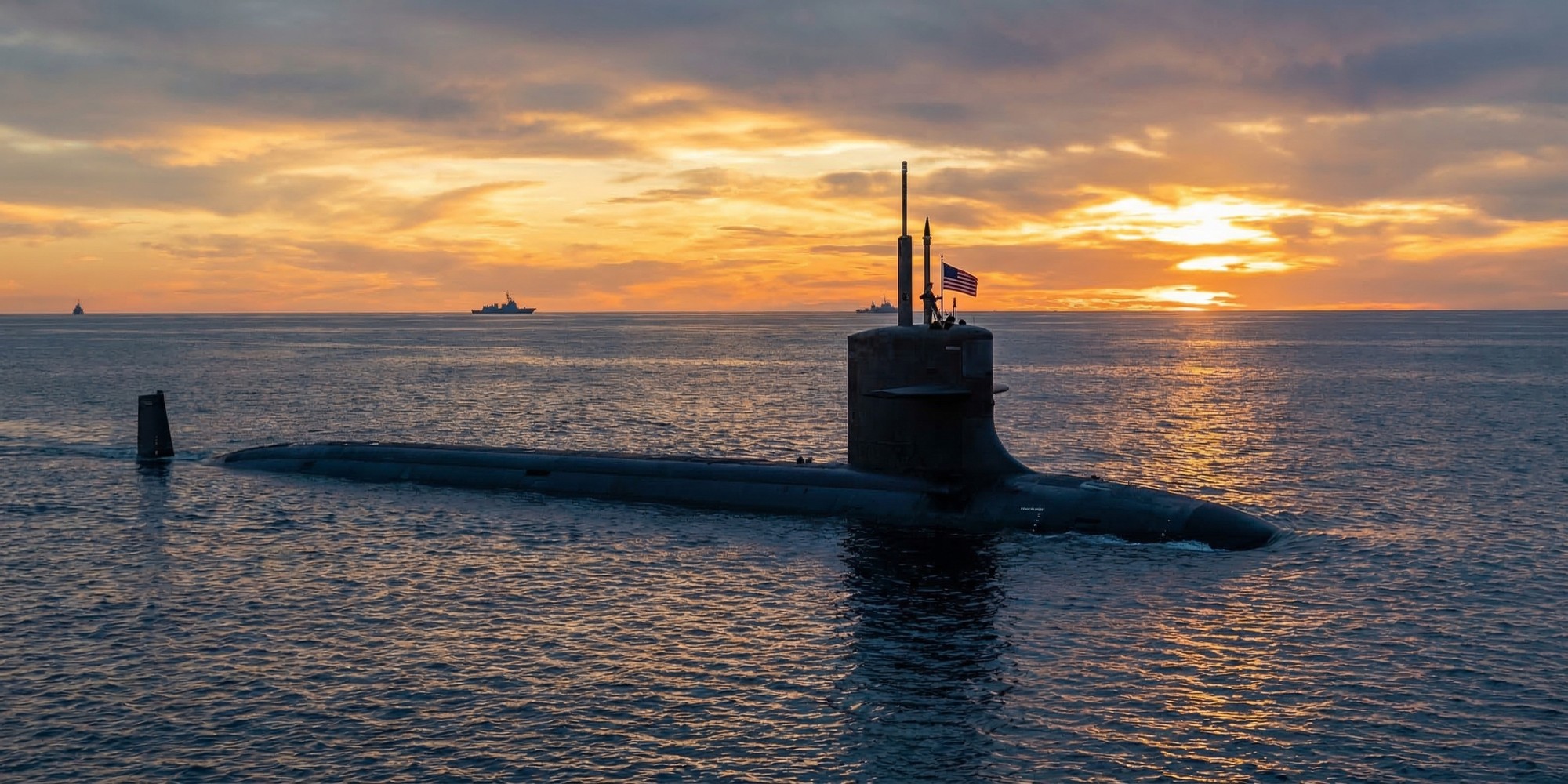
The AUKUS submarine partnership — a landmark 2021 trilateral security pact between the United States, the United Kingdom, and Australia — is facing its most sustained scrutiny since announcement. A Pentagon review completed in December 2025 and a new Congressional Research Service report published on January 26, 2026 have surfaced fundamental questions about whether Washington can or will deliver the Virginia-class nuclear-powered submarines that form the core of the agreement.
With Australia having committed an estimated A$368 billion ($240 billion) over three decades to the program, and with Canberra doubling down on its Osborne shipyard investment in February 2026, the stakes could not be higher — for the bilateral alliance, for Indo-Pacific deterrence, and for Washington's credibility as a security partner.
Key Takeaways
- The Pentagon completed its AUKUS review in December 2025, finding opportunities to put the deal on the "strongest possible footing" but not resolving core questions about Virginia-class submarine transfers.
- A January 2026 Congressional Research Service report openly explores the possibility that Australia may never receive Virginia-class submarines, citing U.S. naval capacity constraints and Taiwan contingency concerns.
- Australia pledged A$3.9 billion ($2.7 billion) toward Osborne shipyard construction in February 2026, part of a broader A$368 billion commitment to the program.
- The CRS report proposes a "military division of labour" alternative in which Virginia-class submarines remain in U.S. service while operating from Australian bases.
The Pentagon Review and Its Ambiguity
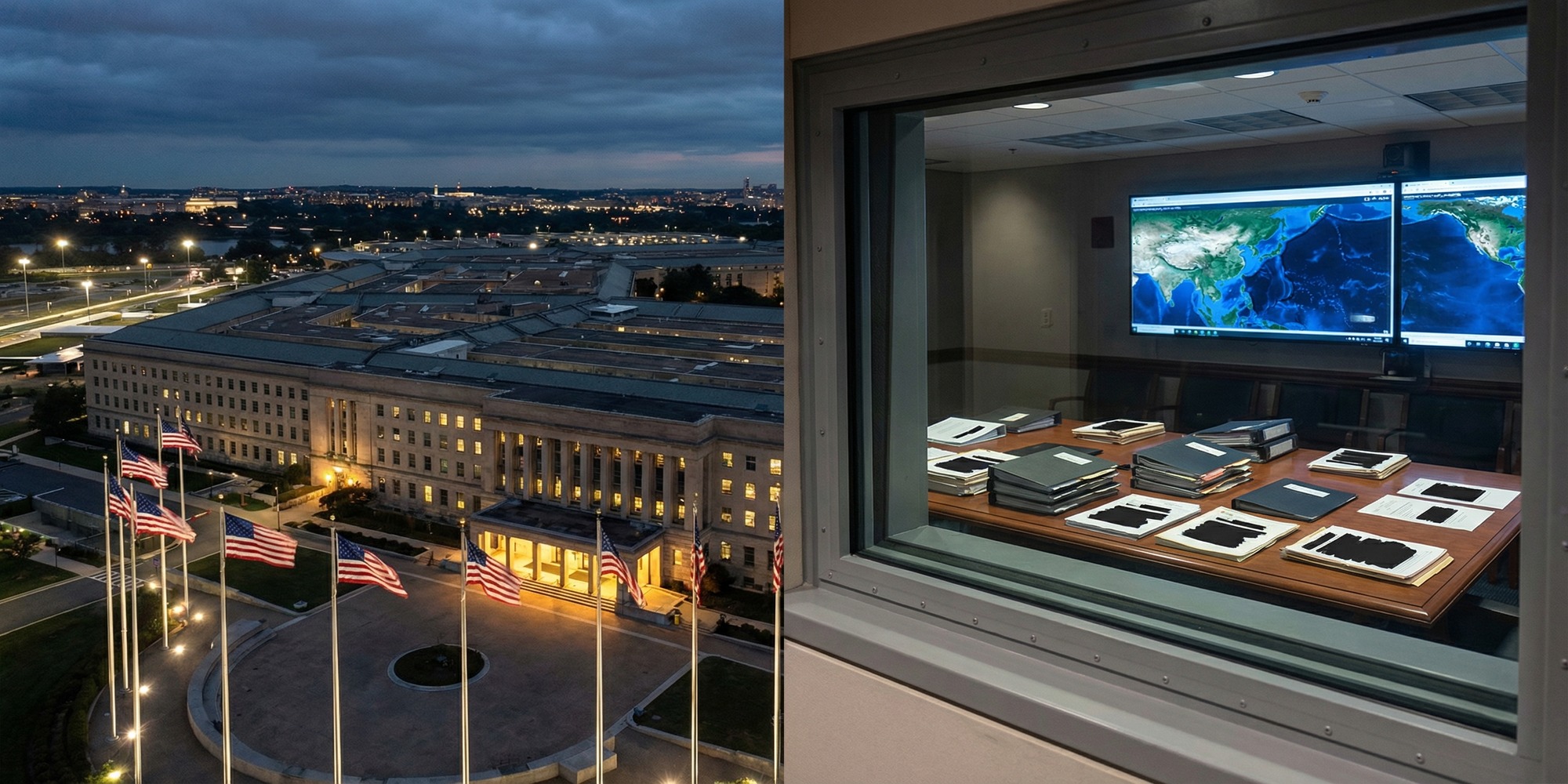
Led by Under Secretary of Defense Elbridge Colby, the Pentagon's AUKUS review was launched in June 2025 and completed that December. The review was handed to Australian and British officials for consideration, with Pentagon spokesperson Sean Parnell confirming its completion on December 4, 2025.
"Consistent with President Trump's guidance that AUKUS should move 'full steam ahead,' the review identified opportunities to put AUKUS on the strongest possible footing."
— Pentagon spokesperson Sean Parnell, December 4, 2025
Australian Defense Minister Richard Marles said Canberra had received the review and was "working through it," adding that the Pentagon's recommendations offered a roadmap to "do AUKUS better." British officials similarly welcomed the review's completion. But the diplomatically calibrated language masked harder questions.
Colby had previously warned that submarines were "a scarce, critical commodity" and that U.S. industry could not produce enough boats to meet American demand. The review specifically examined whether Australia was moving fast enough to build its own nuclear submarine capacity — a pointed concern that carried implicit consequences if the answer was no. Canberra's response came the following February: Australian Prime Minister Anthony Albanese announced A$3.9 billion ($2.7 billion) in funding toward construction of the Osborne shipyard in South Australia, where BAE Systems and Australia's ASC will eventually build indigenous AUKUS-class submarines.
"Investing in the submarine construction yard at Osborne is critical to delivering Australia's conventionally-armed, nuclear-powered submarines," Albanese said. South Australian Premier Peter Malinauskas described the commitment as "just the beginning," with official projections placing the total build cost at A$30 billion over coming decades.
What Congress Is Actually Asking
More direct than the Pentagon's measured statement was the January 26, 2026 Congressional Research Service report authored by naval affairs analyst Ronald O'Rourke, a four-decade veteran of submarine program analysis. Titled "Navy Virginia-Class Submarine Program and AUKUS Submarine (Pillar 1) Project: Background and Issues for Congress," the report examined the full range of options available to U.S. lawmakers — including an outcome in which no Virginia-class submarines are transferred to Australia at all.
The report described an alternative "military division of labour" under which the United States would not sell Virginia-class submarines to Australia. Instead, those boats would remain in U.S. Navy service, deployed from Australian bases alongside UK and U.S. attack submarines already planned to rotate through Western Australia. Australia would redirect its submarine acquisition budget toward other military capabilities — long-range anti-ship missiles, drones, loitering munitions, or B-21 long-range bombers — to serve as a complementary force supporting U.S. missions.
One of the central arguments advanced in support of this alternative was Australia's refusal to pre-commit to supporting the United States in the event of a conflict with China over Taiwan. As the report stated, selling Virginia-class submarines to Australia "would thus convert those SSNs from boats that would be available for use in a US-China crisis or conflict into boats that might not be available for use in a US-China crisis or conflict." That framing was strikingly direct: Canberra's stated strategic ambiguity on Taiwan is being weighed against its entitlement to American military hardware.
The CRS report also raised cybersecurity concerns, noting that sharing sensitive nuclear submarine technology increases the "attack surface" that China or Russia could exploit to penetrate defense contractor networks — a vulnerability it described as already acute, given the active efforts of Chinese-linked hackers to penetrate Australian government and contractor systems.
The Industrial Capacity Problem
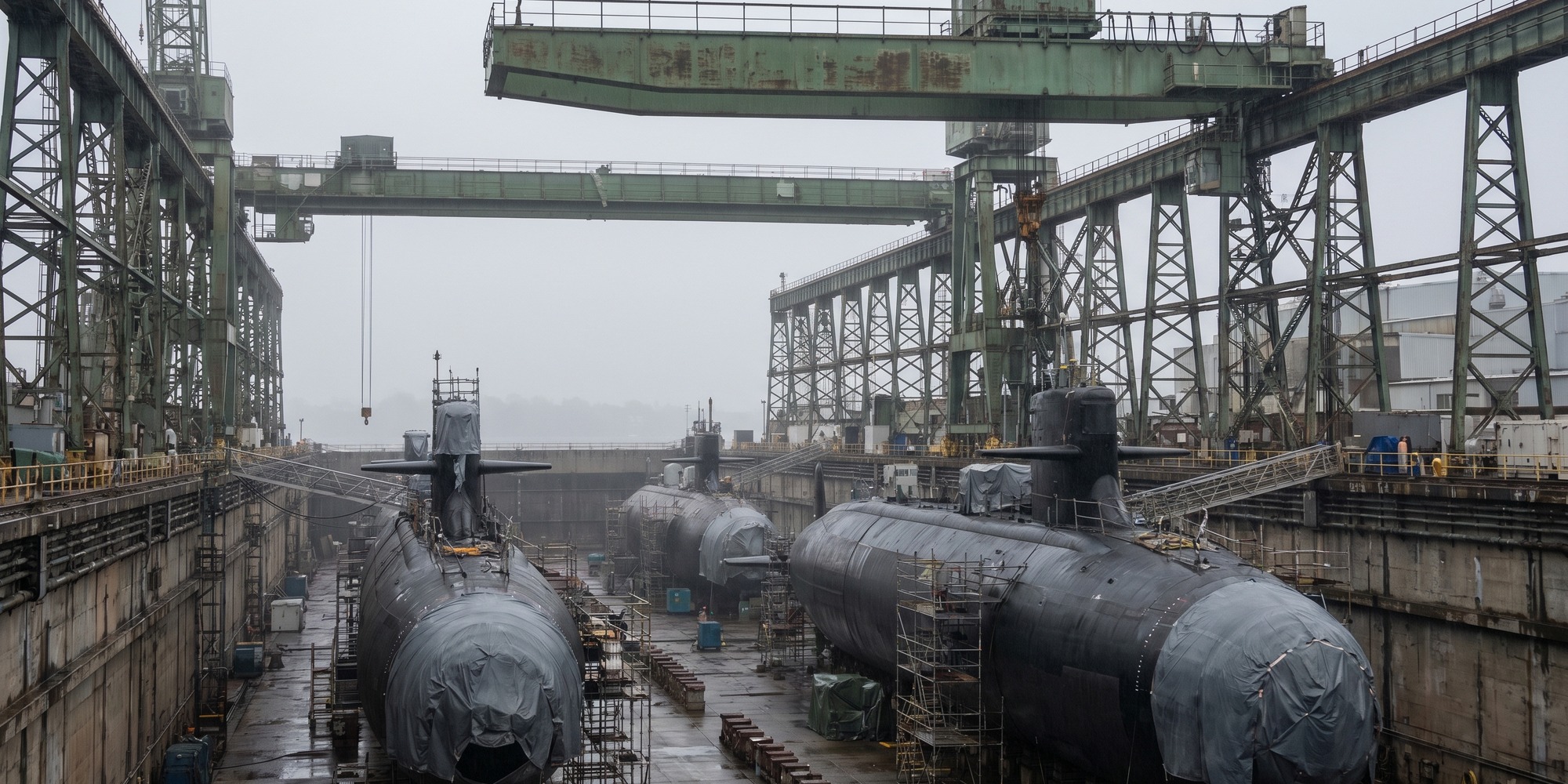
Beyond strategic contingencies, the AUKUS debate is constrained by a physical reality: American shipyards cannot meet existing domestic demand. Under the current plan, the U.S. Navy procures approximately two Virginia-class submarines per year. That rate has consistently fallen short of stated requirements, and a maintenance backlog of submarines already in service further strains the industrial base. The prospect of diverting three to five Virginia-class submarines to Australia — even over a decade — adds pressure to a system already running behind schedule.
The existing AUKUS "optimal pathway" calls for the first Virginia-class submarine to be transferred to Australia by approximately 2032, with Australian-built AUKUS-class submarines not entering service until "the early 2040s." Both timelines were already considered aggressive before the current debate over whether Congress will authorize the transfers at all. As analysts tracking China's ongoing military modernization and economic posture have noted, the Indo-Pacific security window is compressing — not expanding — making the timeline question increasingly consequential.
Policy Implications for the U.S.-Australia Alliance
The AUKUS debates arrive at a particularly sensitive moment in the broader architecture of U.S. alliances. The Trump administration has adopted an explicitly transactional approach to security partnerships, prioritizing measurable burden-sharing and clear strategic commitments over the unconditional guarantees that characterized Cold War alliance architecture. The NATO burden-sharing disputes — including Washington's confrontation with Spain over defense spending and base access — reflect the same logic now being applied to the Indo-Pacific. As U.S. alliance tensions have mounted across both the Atlantic and Pacific theaters, the administration has consistently asked allies to make explicit the commitments that were once assumed.
Australia's reluctance to pre-commit on Taiwan is, from Canberra's perspective, rational domestic politics. But it creates friction in Washington at precisely the moment when the U.S. is weighing the transfer of some of its most sensitive and scarce military hardware. The alternative proposed in the CRS report — American submarines operating from Australian soil under U.S. command — is not necessarily a lesser outcome for the regional balance of power. But it would mean Australia retaining less sovereign military capability and remaining strategically dependent on American operational decisions for its security architecture.
The Road Ahead
The United States has not signaled intent to cancel or fundamentally restructure AUKUS. Trump's "full steam ahead" posture, relayed through Pentagon channels, remains the official framework. Australia's A$1.6 billion already invested in American naval infrastructure is tangible evidence of Canberra's commitment. And the strategic logic behind a more capable Australian Navy — as a counterweight to China's expanding Pacific presence — continues to command bipartisan support in Washington, where skepticism is focused on implementation rather than the strategic rationale.
But the January 2026 CRS report has accomplished what official diplomatic statements cannot: it has put on the record the full range of options Congress is actively weighing. For Australian defense planners, the document is not a threat — it is an honest accounting of the constraints Washington faces and the calculations it will make if industrial and strategic conditions do not improve. The "optimal pathway" remains the working plan. Whether it remains feasible will depend on whether American shipyards can close the gap between commitment and production — and whether Canberra can offer the strategic clarity Washington is quietly seeking.
Related reading
- Armed Conflicts Map — Conflict briefings and theater context.