Ukraine-Russia Talks Stall Over Venue as Iran War Diverts U.S. Focus
Washington proposed hosting the next round of trilateral negotiations on American soil — Moscow said no. As the Iran conflict continues to occupy U.S. diplomatic bandwidth, Ukraine is left waiting for a date, a location, and a commitment.
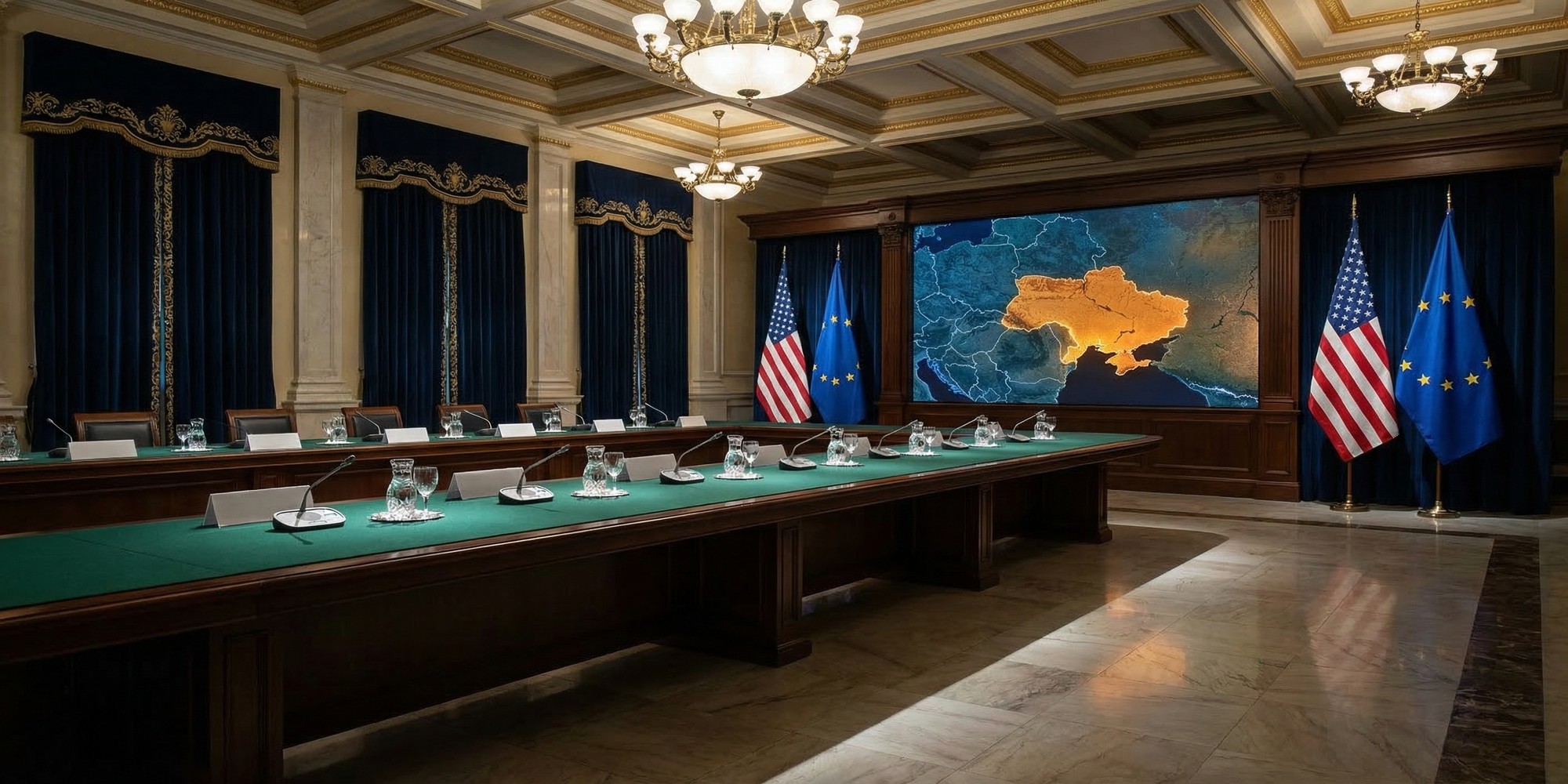
The U.S.-brokered effort to end Russia's war on Ukraine has hit a procedural wall. Ukrainian President Volodymyr Zelenskyy said on Saturday that Kyiv is prepared for the next round of trilateral peace negotiations — but that Washington and Moscow have yet to agree on where to hold them. The United States proposed hosting the talks on American soil; Russia declined to send a delegation. The impasse, though logistical on its surface, reflects deeper fractures in a peace process that has been losing momentum since the Iran war erupted on February 28.
The latest standstill comes as the Trump administration's foreign policy bandwidth is stretched thin across two active theaters. U.S. envoys Steve Witkoff and Jared Kushner, who have led the American side of the Ukraine negotiations, have been diverted by the Middle East crisis. For Kyiv, the delay carries concrete costs: Russian forces continue near-daily attacks, and the prolonged pause in talks risks cementing battlefield conditions that favor Moscow's incremental territorial advances.
Key Takeaways
- Ukraine is ready for the next round of trilateral talks; Russia refused a U.S.-proposed venue, leaving the talks in limbo as of March 15.
- U.S. envoys Witkoff and Kushner have been diverted to the Middle East since the Iran war began February 28, stalling Ukraine diplomacy.
- Zelenskyy warned that the Iran war poses a "very high" risk of draining air defense stockpiles Ukraine depends on to counter Russian missile strikes.
- The Financial Times reported that the peace process is "fading" as Trump loses interest in negotiations and eases pressure on Russia.
From UAE Talks to a Venue Dispute
Trilateral negotiations between American, Ukrainian, and Russian teams had been making cautious progress through the early weeks of 2026. Multiple rounds of talks took place in the United Arab Emirates, with U.S. envoys serving as both mediators and pressure points. The framework built on the foundational Jeddah process from March 2025, when Ukraine had expressed readiness to accept a U.S. proposal for an immediate, interim 30-day ceasefire. At the time, the State Department stated that "the United States has communicated to Russia that Russian reciprocity is the key to achieving peace" — a formulation that has gone unanswered for nearly a year.
The diplomatic calendar shifted abruptly when U.S. and Israeli forces struck Iran on February 28, triggering a regional escalation that pulled Washington's attention firmly toward the Persian Gulf. The Geneva sessions scheduled for early March were quietly shelved. Ukraine's diplomatic team, left without a confirmed meeting date, was relegated to public signaling — with Zelenskyy repeatedly broadcasting readiness to talk while privately waiting on Washington's next move. The situation represents a significant parallel to how ceasefire diplomacy has repeatedly stalled in the Iran theater as well, where rejection of terms has become a recurring cycle despite U.S. pressure.
"We are waiting for a response from the Americans. Either they will change the country where we meet, or the Russians must confirm the U.S. We are not blocking any of these initiatives. We want a trilateral meeting to take place."
— President Volodymyr Zelenskyy, media briefing, March 15, 2026
Moscow's Refusal and the Diplomacy of Venue
The specific dispute over hosting location is not merely procedural. Russia's refusal to travel to the United States for negotiations is a calibrated signal about the terms of engagement — one that Moscow has deployed before to project parity and challenge the framing of any talks as U.S.-mediated rather than U.S.-supervised. The Kremlin's spokesman confirmed a "pause in negotiations" without offering a proposed alternative venue, leaving Washington to either concede a neutral third-country location or allow the impasse to harden.
In a briefing Saturday, Zelenskyy laid out the practical arithmetic: Ukraine is not blocking any initiative and is prepared to meet wherever Washington and Moscow agree. The burden of resolution, he made clear, rests with the two powers that have determined the shape of this war since its full-scale escalation in February 2022. A French diplomatic initiative has also complicated the picture, with Paris pressing Russia to allow European nations a seat at the table — a demand Moscow has resisted, preferring bilateral contacts with the United States over multilateral formats that would amplify European pressure.
Fighting Continues While Diplomacy Idles
The operational cost of the diplomatic stall is not abstract. In the week ending March 15, Russia launched 1,770 attack drones, more than 1,530 guided aerial bombs, and 86 missiles against Ukrainian targets, according to Zelenskyy's public accounting. Overnight on March 14–15, Russian forces launched 97 drones; Ukraine's air force intercepted 90. Five people were killed in Kherson, Kharkiv, and Zaporizhzhia districts; six were injured in Sumy and Dnipropetrovsk. These figures represent a sustained pressure campaign that has continued unabated regardless of the diplomatic calendar.
Russia has also maintained its assertion of battlefield progress. In a late-night call with President Trump around March 9, Russian President Vladimir Putin told Trump that Russian forces were "advancing rather successfully" in Ukraine. The Kremlin's framing — communicated directly to the U.S. president — is designed to reduce Washington's sense of urgency about a ceasefire and reinforce Moscow's negotiating leverage by suggesting that time favors the Russian side. Ukraine contests this characterization and has cited its own counteroffensive advances, including pushing Russian forces from more than 400 square kilometers in the Dnipropetrovsk region.
Policy Implications: Leverage, Stockpiles, and the Technology Offer
Beyond the venue standoff, the peace process faces structural challenges. The Financial Times reported that officials in multiple capitals describe the Ukraine peace process as "fading" as Trump focuses on the Iran campaign and reduces pressure on Russia — including a reported decision not to impose new sanctions on Russian oil despite earlier warnings. The strategic logic of the administration's Ukraine policy has been under strain since the Iran war began: the same military resources and diplomatic attention required to sustain pressure on Moscow are now concentrated on the Persian Gulf.
Zelenskyy has also raised an alarm about a secondary strategic threat: eleven countries have approached Kyiv requesting assistance with Shahed-type drone countermeasures amid the Iran war, competing for the same defense industrial outputs that Ukraine needs. Zelenskyy warned of a "very high" risk that the Iran conflict could drain air defense stockpiles — including Patriot interceptors — that Ukraine depends on to defend against Russian ballistic missile strikes. He said he discussed with French President Emmanuel Macron in Paris on Friday whether SAMP/T systems could serve as an alternative to U.S.-made Patriot batteries, noting Ukraine would be "first in line" to test any viable replacement. The air defense supply chain stress has direct market implications, as defense contractors and equity markets have already priced in the compounding demand from both the Iran and Ukraine theaters.
On the economic side, Zelenskyy noted that a $35–50 billion defense cooperation offer remains on the table — a proposed deal that would give the United States access to technology from roughly 200 Ukrainian drone, artificial intelligence, and electronic warfare firms. Trump publicly stated that Washington has no need for Ukrainian drone assistance, saying in a Fox News Radio interview on Friday: "No, we don't need their help on drone defense." Zelenskyy pushed back, noting that U.S. military institutions had independently contacted Ukraine's Ministry of Defense and other military leadership "several times" to request technical assistance.
Where the Process Stands
As of March 16, the trilateral framework remains nominally intact but functionally suspended. Ukraine has signaled at every level that it is ready to continue. Russia has declined the proposed venue. The United States has yet to respond with an alternative. The structural challenge for the State Department is that both the Iran and Ukraine peace processes demand sustained high-level diplomatic attention — and the administration has so far treated them as sequential rather than parallel priorities. Whether Washington can re-engage the Ukraine track while managing the active Iran theater will determine whether the ceasefire proposal that has been on the table since Jeddah in March 2025 ever receives a formal answer from Moscow. The venue stall is still a pause in the same Russia–Ukraine war tracked on the Armed Conflicts Map's Russia–Ukraine war briefing.
Related reading
- Oil Routes — Energy corridors, tanker risk, and commodity geopolitics.