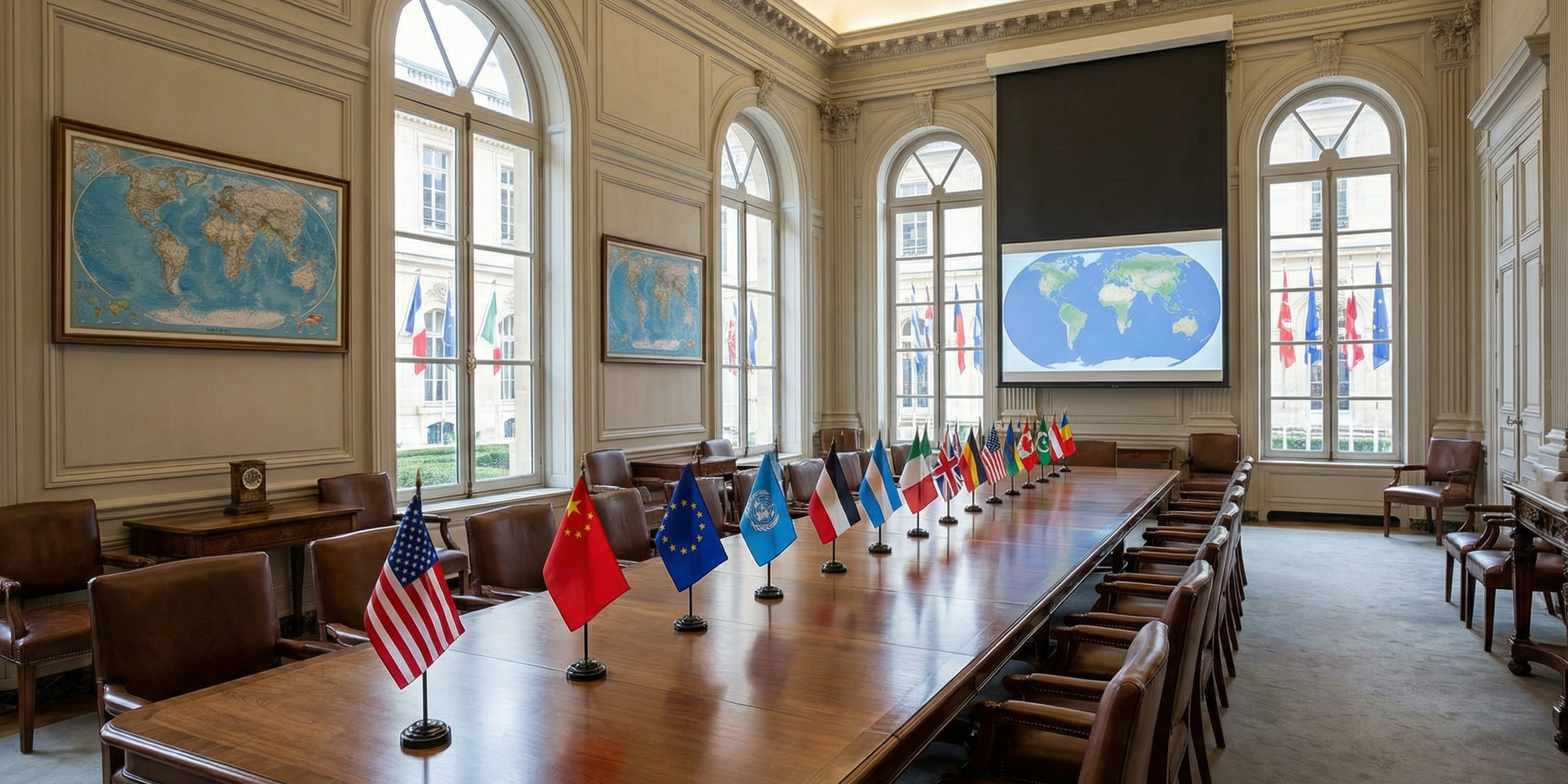
State Department Establishes New Humanitarian Bureau, Completing Post-USAID Foreign Aid Overhaul
Secretary Rubio's announcement of a new Bureau of Humanitarian Affairs marks the institutional close of a 14-month restructuring that dismantled USAID and shifted U.S. foreign assistance under direct State Department command.
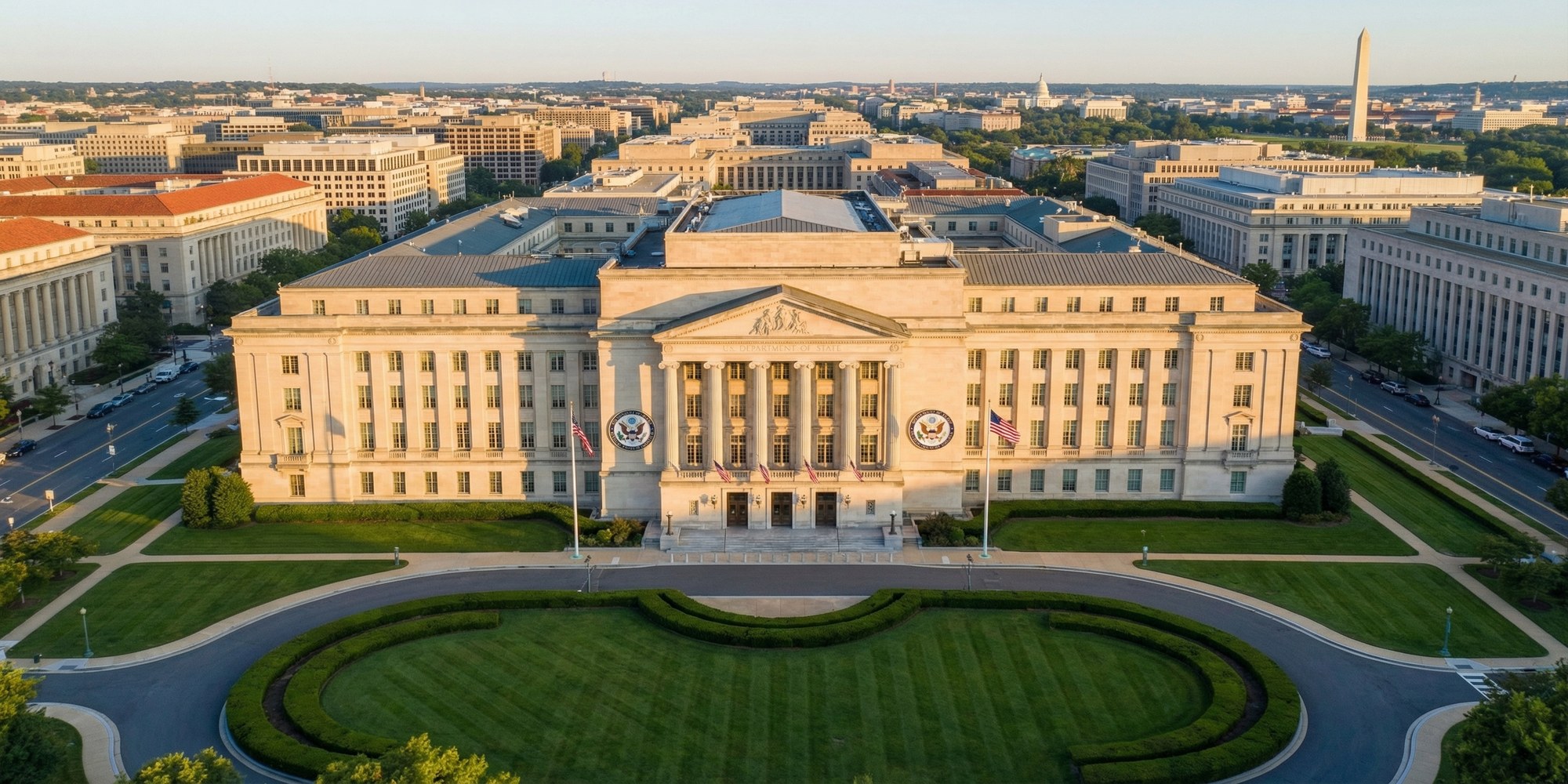
The U.S. State Department announced on Friday the establishment of a new bureau to coordinate American responses to natural disasters and humanitarian crises worldwide, according to a senior department official. The move formally caps the Trump administration's 14-month restructuring of U.S. foreign assistance — a transformation that began with the near-total dissolution of the U.S. Agency for International Development (USAID) and ends with foreign aid fully consolidated under Secretary Marco Rubio's State Department.
The new bureau, operating under the Under Secretary for Foreign Assistance, Humanitarian Affairs, and Religious Freedom, is designed to centralize disaster response coordination, humanitarian programming, and crisis assistance into a single chain of command reporting directly to department leadership. Officials described it as the concluding structural piece of a reorganization that has fundamentally redefined how the United States delivers foreign aid.
Key Takeaways
- The State Department established a new humanitarian crisis bureau on March 20, 2026, the final institutional step in the Trump administration's post-USAID foreign aid restructuring.
- The bureau operates under the Under Secretary for Foreign Assistance, Humanitarian Affairs, and Religious Freedom — a new State Department leadership position created during the 2025 reorganization.
- USAID employed approximately 10,000 staff and administered roughly $40 billion annually before its dissolution; the successor structure's capacity and resourcing remain under congressional scrutiny.
- Critics warn the consolidated model reduces the operational independence that allowed USAID to deploy faster than traditional diplomatic channels; proponents argue it improves accountability and strategic alignment.
The Architecture of Dismantlement
The path to Friday's announcement began in late January 2025, when President Trump signed Executive Order 14169, "Reevaluating and Realigning United States Foreign Aid," pausing nearly all U.S. foreign assistance pending a 90-day review. Within days, DOGE-aligned operatives and State Department officials began the physical shutdown of USAID operations — locking employees out of agency systems, halting grant disbursements, and placing thousands of contractors on administrative leave.
USAID, founded by President Kennedy in 1961, had grown into the world's largest bilateral development and humanitarian agency, administering approximately $40 billion annually across more than 100 countries. Its workforce of roughly 10,000 direct-hire employees — augmented by tens of thousands of contractors and implementing partners — represented decades of accumulated institutional expertise in disaster response, public health, democracy promotion, and food security programming.
"The Under Secretary for Foreign Assistance, Humanitarian Affairs and Religious Freedom ensures effective management and oversight of foreign assistance programs, coordinates international disaster, crisis and humanitarian response efforts, supports global immigration and border security, and advances the Department's values-based diplomatic agenda."
— U.S. Department of State, Office of the Under Secretary for Foreign Assistance, Humanitarian Affairs, and Religious Freedom
By spring 2025, federal courts had temporarily blocked the termination of certain USAID personnel, but the administration pressed forward through attrition, political appointee placements, and the redirection of congressionally appropriated funds. By mid-2025, the legislative and legal battles had stabilized around a de facto outcome: USAID as an independent agency was finished, and the question was no longer whether consolidation would happen, but what shape it would take.
What the New Bureau Signals
The Bureau of Humanitarian Affairs — as the new office has been described — represents the affirmative side of a reorganization that has been defined largely by what it dismantled. Rather than simply absorbing USAID functions into existing State Department offices, the administration has constructed a dedicated humanitarian coordination structure that, in theory, preserves at least some of the specialized crisis-response architecture that critics feared would be lost.
The bureau's placement under a new Under Secretary — a position that did not exist in the department's structure before the 2025 reorganization — signals an intent to elevate foreign assistance as a diplomatic function rather than treat it as a development or technical enterprise separate from mainstream foreign policy. In the administration's framing, that is precisely the point: foreign aid should serve American strategic interests, not operate as a parallel diplomatic track run by technocrats insulated from presidential direction.
Supporters of the model point to historical precedent for integration. The Marshall Plan, often cited as the gold standard of U.S. foreign assistance, was administered through the State Department before the development bureaucracy was professionalized and separated over subsequent decades. Friday's announcement, in this reading, is a structural return to first principles — foreign aid as an instrument of diplomacy rather than an end in itself.
Congressional Scrutiny and Capacity Concerns
On Capitol Hill, the announcement is unlikely to settle ongoing disputes over the foreign aid overhaul's operational consequences. The Congressional Research Service has flagged in multiple analyses that the dissolution of USAID's institutional infrastructure — procurement systems, partner networks, field offices, and technical staff — poses risks that reorganization alone cannot repair quickly. Rebuilding crisis-response capacity takes years, not months, and the new bureau inherits responsibility for a portfolio of active humanitarian commitments across conflict zones, post-disaster recovery efforts, and food insecurity programs.
A senior House Democrat highlighted a related concern on Thursday: a $1.58 billion U.S. government investment in USA Rare Earth, structured in a manner that raises questions about oversight and accountability within the department's foreign economic posture. While distinct from the humanitarian bureau, the episode reflects broader congressional unease about whether the administration's restructured foreign assistance architecture has adequate institutional checks. Meanwhile, as diplomatic resets in Latin America — including the U.S.-Venezuela normalization — demonstrate, the State Department is simultaneously managing active foreign policy realignments that will test the new bureau's capacity to coordinate assistance alongside diplomatic tracks.
International partners and nongovernmental organizations that implement U.S.-funded programming have also raised concerns about continuity. Many implementing partners operate under multi-year cooperative agreements that span the transition, and the reorganization has created administrative uncertainty around grant renewals, reporting requirements, and field-level authorizations. The new bureau's first institutional task may be less about strategic vision and more about resolving the backlog of contractual and operational questions left unresolved during 14 months of structural flux.
Strategic Implications for U.S. Soft Power
Beyond the bureaucratic questions, the establishment of the new bureau arrives at a moment of heightened competition for global influence. China's Belt and Road Initiative continues to expand infrastructure financing across the Global South, and Beijing has shown increasing willingness to position its own development assistance as an alternative to Western-conditioned aid. The Trump administration's argument — that American foreign assistance, restructured and strategically directed, is more effective than a diffuse aid bureaucracy — will be tested against that competitive backdrop.
The administration's consolidation model does offer potential efficiencies. When humanitarian response is integrated with diplomatic strategy, the argument goes, the United States can move faster, with clearer political authorization, and with greater accountability for outcomes. Whether those efficiencies materialize depends heavily on resources, staffing levels, and whether Congress appropriates sufficient funds for a bureau that lacks the decades of established relationships and field infrastructure that USAID built.
The economic reverberations of the foreign aid overhaul extend beyond humanitarian programming. As U.S. markets have decoupled from global equity pressures during the current period of international instability, the restructured foreign assistance architecture will play a role in shaping how American economic influence is exercised in developing economies increasingly caught between Western and Chinese investment frameworks.
Looking Ahead
For the State Department, Friday's announcement closes one chapter while opening another. The harder work — staffing the bureau, reestablishing partner relationships, resolving legislative disputes over reprogrammed funds, and delivering measurable outcomes in active humanitarian crises — begins now. Secretary Rubio has staked significant political capital on the argument that consolidation makes American foreign assistance more effective and accountable. The new bureau is where that argument will be tested against operational reality.
Congress will be watching closely. Several pending authorization and appropriations measures include provisions that condition foreign aid restructuring on specific reporting requirements, staffing benchmarks, and emergency response capacity certifications. The administration will need to demonstrate, through the bureau's first months of operation, that the structural changes it has championed produce results rather than simply reconfigure which corner of the State Department handles humanitarian crises. The institutional architecture is now in place — the question is whether it will perform.
Related reading
- Armed Conflicts Map — Conflict briefings and theater context.